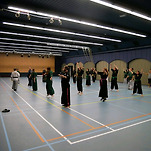
<p style="text-align: left;"></p><div class="figure-img" data-ke-type="image" data-ke-style="alignCenter" data-ke-mobilestyle="widthOrigin"><img src="https://t1.daumcdn.net/cafeattach/17RPA/7d0a56da5750fa53e1fefce516b517f68d74e941" class="txc-image" data-img-src="https://t1.daumcdn.net/cafeattach/17RPA/7d0a56da5750fa53e1fefce516b517f68d74e941" data-origin-width="2048" data-origin-height="945"></div><p style="text-align: left;"><br><br>《Patrick's Reflections from the 2026 Netherlands Seminar》<br><br><br>The great thing about being able to hold a Haedong Kumdo seminar in our hometown Deventer is that we were able to welcome a truly international group. <br><br>For instance, <br>on Saturday morning, the ssangsu kumbups were not only led by our Grand Master Kim Jeong Seong from South Korea, but also by members from the Netherlands, Belgium and Germany. <br><br>I did sparring practice with an American an received healing from a Greek. <br><br>This seminar was once again an exceptional experience, partly because I was also given the opportunity to teach a small group some ssangsu kumbups myself.<br><br>Being able to split up the group of participant to have them taught by members with a black belt was not an unnecessary luxury. <br><br>Due to the large group that attended our seminar, Grand Master Kim’s explanations were not always easy to follow for everyone. <br><br>That is understandable, of course. Someone might occasionally stand in your line of sight, the explanation may not be audible everywhere in the sports hall, and sometimes the pace can be a bit faster than you can keep up with. <br><br>This last point not only applies to members who have only just started with Haedong Kumdo, I also had times that I was glad I could manage to follow at least the greater part of a form.<br><br>It’s never possible to remember all that is teached during a seminar. We are martial artists, not supernatural. And besides that, it’s not only from our Grand Master that we learn during a seminar. <br><br>As described above, we also learn from each other, whether we are color belted or have a Dan degree.<br><br>Additionally, the tournament held on Sunday afternoon was also an educational experience, and not just for the participants. <br><br>Through the sword dance and the sparring contest, the audience was abled to discover the other possibilities Haedong Kumdo offers besides the standard forms.<br><br>Furthermore, during the informal parts of the program, such as the lunch, the communal dinner in the evening or the casual conversations in the gym canteen, valuable information and friendships were exchanged.<br><br>And even when you are called upon to explain to others forms you yourself already are familiar with, you often learn something new. <br><br>While you don’t learn any new forms yourself during that part of the lesson, explaining and demonstrating forms to others and answering questions about them let you experience a different view on those forms, which can be very inspirational.<br><br>And teaching can be a lot of fun too. When I demonstrated the half-turn jump from ssangsu kumbup number two, I saw that a participant, who was starting to get a bit discouraged by all the turns and strikes he had to remember, suddenly realized: <br><br>‘Wow, nów I’m learning something really cool!’ <br><br>And such an observation always works very contagious.<br><br><span style="color: #006DD7;"><span data-ke-size="size20">Commentary</span></span> <br><br><span data-ke-size="size20">Learning by Teaching... Growing Together</span><br><br><i>Thoughts on Patrick's Reflections from the 2026 Netherlands Seminar<br><br><br>As I have read the reflections from representatives of different countries, one thing has become very clear to me.<br><br>Although everyone attended the same seminar, each person took home something different.<br><br><span style="color: #006DD7;">Keith</span> 🇺🇸 wrote about learning.<br><br><span style="color: #006DD7;">Chris 🇬🇷 </span>wrote about philosophy and self-cultivation.<br><br><span style="color: #006DD7;">Dominic 🇳🇱 </span>wrote about responsibility and leadership.<br><br><span style="color: #006DD7;">Ben</span> 🇧🇪 wrote about community and family.<br><br>And <span style="color: #006DD7;">Patrick</span> wrote about learning through teaching and growing together.<br><br>That was the message I felt throughout his reflection.<br><br>One part of Patrick's reflection especially made me smile.<br><br>He wrote that even when we teach forms we already know, we often discover something new ourselves.<br><br>I completely agree.<br><br>Teaching is never the end of learning.<br><br>In fact, teaching is one of the deepest ways of learning.<br><br>When we explain a movement to someone else, we begin to understand it more clearly ourselves.<br><br>When we answer questions, we discover new perspectives.<br><br>And when we witness another person's progress, our own understanding continues to grow.<br><br><u>This is one of the reasons why, during our international seminars, I encourage black belts from different countries to teach small groups.<br>Martial arts are not built by one teacher alone.</u><br><br><span style="color: #006DD7;">We learn from one another.<br>We help one another.<br><br>And together we create a living international community.</span><br><br>I was also happy to read Patrick's story about the participant who suddenly became excited after learning the jump in Ssangsu Kumbup No. 2.<br><br>That small moment beautifully reminds us why teaching is such a rewarding experience.<br><br>Sometimes a single movement can awaken a student's enthusiasm.<br><br>And sometimes a teacher receives just as much inspiration from that moment as the student does.<br><br>Patrick,<br><br>Thank you for your passion, your willingness to teach, and your sincere heart.<br><br>Over the years, I have watched you grow steadily—not only as a practitioner, but also as someone who is beginning to understand the joy and responsibility of teaching others.<br><br>Please continue to learn with humility.<br>Continue to teach with kindness.<br><br>And continue to inspire others through your example.<br><br><span style="color: #006DD7;">A true teacher is <br>not the one who knows the most, <br>but the one who continues to grow together with others.</span><br><br><span style="color: #EE2323;">Keep learning.<br>Keep teaching.<br>And keep growing together.</span><br><br>HAEDONG!<br><br></i></p><div class="figure-img" data-ke-type="image" data-ke-style="alignCenter" data-ke-mobilestyle="widthOrigin"><img src="https://t1.daumcdn.net/cafeattach/17RPA/227cf7fda91610e2ab48572374d64cb3dd156922" class="txc-image" data-img-src="https://t1.daumcdn.net/cafeattach/17RPA/227cf7fda91610e2ab48572374d64cb3dd156922" data-origin-width="2992" data-origin-height="2992"></div><div class="figure-img" data-ke-type="image" data-ke-style="alignCenter" data-ke-mobilestyle="widthOrigin"><img src="https://t1.daumcdn.net/cafeattach/17RPA/341ca237bca01bf340d24af36b4d2919cfa63da4" class="txc-image" data-img-src="https://t1.daumcdn.net/cafeattach/17RPA/341ca237bca01bf340d24af36b4d2919cfa63da4" data-origin-width="1536" data-origin-height="2048"></div><div class="figure-img" data-ke-type="image" data-ke-style="alignCenter" data-ke-mobilestyle="widthOrigin"><img src="https://t1.daumcdn.net/cafeattach/17RPA/396c32571205fb08ebcbd20295995e1ba02a73d8" class="txc-image" data-img-src="https://t1.daumcdn.net/cafeattach/17RPA/396c32571205fb08ebcbd20295995e1ba02a73d8" data-origin-width="786" data-origin-height="319"></div><div class="figure-img" data-ke-type="image" data-ke-style="alignCenter" data-ke-mobilestyle="widthOrigin"><img src="https://t1.daumcdn.net/cafeattach/17RPA/7c7d6405c9c811dd8ab9bc6902df4675f6c0c9f3" class="txc-image" data-img-src="https://t1.daumcdn.net/cafeattach/17RPA/7c7d6405c9c811dd8ab9bc6902df4675f6c0c9f3" data-origin-width="2992" data-origin-height="2992"></div><div class="figure-img" data-ke-type="image" data-ke-style="alignCenter" data-ke-mobilestyle="widthOrigin"><img src="https://t1.daumcdn.net/cafeattach/17RPA/bed0630fda4e60b03e81ea7046bcebe13c266ab3" class="txc-image" data-img-src="https://t1.daumcdn.net/cafeattach/17RPA/bed0630fda4e60b03e81ea7046bcebe13c266ab3" data-origin-width="4000" data-origin-height="1848"></div><div class="figure-img" data-ke-type="image" data-ke-style="alignCenter" data-ke-mobilestyle="widthOrigin"><img src="https://t1.daumcdn.net/cafeattach/17RPA/c6331c716c9942500eb3ec04abc35d4c243f9cb6" class="txc-image" data-img-src="https://t1.daumcdn.net/cafeattach/17RPA/c6331c716c9942500eb3ec04abc35d4c243f9cb6" data-origin-width="2048" data-origin-height="1152"></div><div class="figure-img" data-ke-type="image" data-ke-style="alignCenter" data-ke-mobilestyle="widthOrigin"><img src="https://t1.daumcdn.net/cafeattach/17RPA/c2fde47bf2bb710fdda2282ce24c345995ccf927" class="txc-image" data-img-src="https://t1.daumcdn.net/cafeattach/17RPA/c2fde47bf2bb710fdda2282ce24c345995ccf927" data-origin-width="4000" data-origin-height="1848"></div><div class="figure-img" data-ke-type="image" data-ke-style="alignCenter" data-ke-mobilestyle="widthOrigin"><img src="https://t1.daumcdn.net/cafeattach/17RPA/8a67e34d0d475e0de1c46a2f0c0d63e159f46123" class="txc-image" data-img-src="https://t1.daumcdn.net/cafeattach/17RPA/8a67e34d0d475e0de1c46a2f0c0d63e159f46123" data-origin-width="945" data-origin-height="2048"></div><div class="figure-img" data-ke-type="image" data-ke-style="alignCenter" data-ke-mobilestyle="widthOrigin"><img src="https://t1.daumcdn.net/cafeattach/17RPA/4d9f559191a6842c79b3f38495cd9088aea6f2f6" class="txc-image" data-img-src="https://t1.daumcdn.net/cafeattach/17RPA/4d9f559191a6842c79b3f38495cd9088aea6f2f6" data-origin-width="945" data-origin-height="2048"></div><div class="figure-img" data-ke-type="image" data-ke-style="alignCenter" data-ke-mobilestyle="widthOrigin"><img src="https://t1.daumcdn.net/cafeattach/17RPA/6512a232fa0ac2177705e27c93d69c964298ec6e" class="txc-image" data-img-src="https://t1.daumcdn.net/cafeattach/17RPA/6512a232fa0ac2177705e27c93d69c964298ec6e" data-origin-width="1536" data-origin-height="2048"></div><div class="figure-img" data-ke-type="image" data-ke-style="alignCenter" data-ke-mobilestyle="widthOrigin"><img src="https://t1.daumcdn.net/cafeattach/17RPA/67397cac7a6e9df0993e8a4477ef6794dc5bb6c3" class="txc-image" data-img-src="https://t1.daumcdn.net/cafeattach/17RPA/67397cac7a6e9df0993e8a4477ef6794dc5bb6c3" data-origin-width="1536" data-origin-height="2048"></div><p style="text-align: left;"></p>
<!-- -->