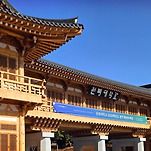
<p><b>조선 태조 진전 경기전 단청의 상징성과 특징 연구 -시대별 단청의 변화상과 1872년 정전 내부 단청을 중심으로-</b>The Symbolism and Characteristics of Decorative Paintings in Gyeonggijeon Shrine Enshrining King Taejo of Joseon –Focusing on the Evolutionary Aspects of Dancheong by Period and the 1872 Interior Dancheong of the Jeongjeon–</p><p> </p><p> </p><p> </p><p>초록 </p><p>본 연구는 조선 태조의 어진을 봉안한 경기전(慶基殿)의 단청에 주목하여, 그 상징성과 조형적 특징을 고찰한 것이다. 경기전은 조선의 개창자인 태조 이성계의 정통성을 시각적으로 표상하는 핵심 공간이며, 이곳의 단청은 단순한 장식을 넘어 정치적·의례적 질서를 내포하는 상징체계로 기능한다. 본고는 경기전 정전 내부의 문양과 색채 구성을 분석함으로써, 조선 왕조의 국가 이념과 미의식이 단청이라는 매체를 통해 어떻게 시각화되었는지를 추적하였다. 경기전 단청은 창건기, 중건기, 쇄신기를 거치며 시대적 요구에 따라 유의미한 변화를 보인다. 실증 자료가 부족한 창건기(1410년경) 단청은 『세종실록』의 ‘극기미려(極其美麗)’라는 기록과 15세기 불화인 <석가탄생도> 전각에 묘사된 금벽단청(金碧丹靑) 형식을 근거로 분석하였다. 이를 통해 조선 초 창업주의 정통성을 세우기 위해 최고급 안료인 진채와 화려한 문양이 사용되었을 개연성을 도상학적으로 유추하였다. 중건기(1614년) 단청은 최근 정전 협칸 상부에서 발견된 원형 단청 조사 결과를 실증적 토대로 삼았다. 전형적인 ‘상록하단(上綠下丹)’의 틀 안에서 녹화(綠花) 중심의 문양과 묶음 장식이 생략된 간결한 병머리초를 확인하였으며, 이는 전란 이후 유교적 예제와 절제를 강조한 진전 공간의 성격이 투영된 결과로 해석된다. 고종 연간의 쇄신기(1872)에는 경기전 단청의 장식성이 고조되는 양상을 보인다. 특히 이 시기 정전 내부에 등장하는 박쥐문, 칠보문 등의 길상문양은 본래 궁궐 건축과 왕실 공예품 등에 주로 사용되던 문양들로 왕실 건축 본연의 장식 전통을 계승하고 적용한 결과로 해석된다. 또한 이 시기 경기전 단청은 궁궐의 격조와 사찰의 장엄미를 독자적으로 수용하는 등 과도기적인 양상도 보여준다. 본 연구는 경기전 정전의 내부 단청이 원형을 잘 간직하고 있을 뿐 아니라 조선 왕조의 통치 이념과 위계를 공간 속에 구현한 장엄체계임을 밝혔다는 점에서 의의가 있다.</p><p> </p><p>This study examines the dancheong (traditional decorative coloring) of Gyeonggijeon, the sanctuary enshrining the portrait of King Taejo, the founder of the Joseon Dynasty, with a focus on its symbolic significance and formal characteristics. Gyeonggijeon serves as a pivotal space for visually manifesting the legitimacy of the dynastic founder. Its dancheong functions not merely as ornamentation but as a sophisticated symbolic system embedding political and ritual orders. By analyzing the patterns and chromatic compositions within the main hall (Jeongjeon), this paper traces how the state ideology and aesthetic consciousness of Joseon were visualized through the medium of dancheong. The dancheong of Gyeonggijeon exhibits significant transformations across the periods of its foundation, reconstruction, and renovation in response to contemporaneous socio-political demands. For the founding period (c. 1410), where empirical data is scarce, this study employs a comparative art-historical approach. Based on the "extremely beautiful (極其美麗)" record in the Sejong Sillok and the geumbyeok (gold-and-green) style depicted in the 15th-century Buddhist painting Birth of Shakyamuni, this research iconographically infers the likelihood that high-grade pigments (jinchae) and opulent motifs were utilized to establish the legitimacy of the new dynasty. The reconstruction period (1614) is analyzed through recent empirical findings of original dancheong discovered in the upper sections of the sanctuary’s side bays. Within the traditional framework of sangnok-hadan (green upper, red lower), the study confirm‎s simplified byeong-meoricho (bottle-shaped end patterns) characterized by green-floral motifs and the omission of bundled ornaments. This is interpreted as a reflection of the Confucian ritual propriety and restraint emphasized in royal sanctuaries following the major wars of the period. During the renovation period (1872) under King Gojong’s reign, the decorative qualities of dancheong were heightened once more to re-establish royal authority. The active introduction of auspicious motifs, such as bat and cloisonné (chilbo) patterns, served as a visual instrument for venerating King Taejo and symbolizing the eternal prosperity of the dynasty. The Gyeonggijeon dancheong uniquely synthesized the elegance of palace architecture with the solemn splendor of Buddhist temples, demonstrating a transitional aesthetic from late Joseon to the modern era. Conclusively, this study elucidates that the dancheong of Gyeonggijeon was a symbolic apparatus embodying the ruling ideology within a physical space. This research provides a critical scholarly clue to understanding the visualization of political culture in early Joseon through the traditional pictorial style of dancheong.</p><p> </p><p> </p><p> </p><p> </p><p>키워드</p><p><span style="color: #0355a3;"></span>조선 태조</p><p>,</p><p><span style="color: #0355a3;"></span>전주 경기전</p><p>,</p><p><span style="color: #0355a3;"></span>단청</p><p>,</p><p><span style="color: #0355a3;"></span>진전</p><p>,</p><p><span style="color: #0355a3;"></span>박쥐문</p><p>,</p><p><span style="color: #0355a3;"></span>칠보문</p><p>King Taejo of Joseon, Gyeonggijeon Shrine, Dancheong, Ritual Space, Bat Motif (Bakjwi-mun), Chilbo Pattern (Chilbo-mun)</p>
<!-- -->