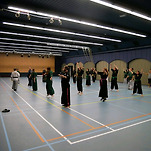
<p style="text-align: left;">Tyyne Jaakkola 1 dan HK essay in Helsinki, Finland 🇫🇮 <br></p><div class="figure-img" data-ke-type="image" data-ke-style="alignCenter" data-ke-mobilestyle="widthOrigin"><img src="https://t1.daumcdn.net/cafeattach/17RPA/e60fc578a10e1b2d69af69572b75f72591f628b5" class="txc-image" data-img-src="https://t1.daumcdn.net/cafeattach/17RPA/e60fc578a10e1b2d69af69572b75f72591f628b5" data-origin-width="902" data-origin-height="1148"></div><p style="text-align: left;"><br>《<b><span data-ke-size="size20">Kindness and sincerity are the way of winning anger》</span></b><br><br>(9. Why must we be kind, sincere, and free from anger?)<br><br>Kindness and sincerity are something we should aim for. At the same time we aim for those,<br>we should avoid anger. But why? Why should we be free from anger?<br>I think that anger is a really powerful feeling and it is easy to let it take over us. Therefore it<br>can often lead to impulsive actions. For example it is easier to make bad decisions we regret<br>afterwards, when we act impulsively and enraged because of anger. Instead while being<br>calm and pacific, it is much easier to think clearly and make more considered decisions.<br>Moreover the feeling of anger also leaves us with a feeling of misery afterwards. For<br>example after yelling out the frustration and displeasure to someone else, we feel bad, we<br>regret it and we think “Why did I say so rudely to them?” As a result, regret causes anger<br>towards ourself.<br>In addition when people are treated badly they start to grow frustration and anger inside of<br>them. If they release the anger and frustration by acting impolitely, they might make the<br>following person frustrated, consequently they spread more anger around them. Generally<br>we do not want to make others angry but with letting the anger go onwards we build a circle<br>of growing anger. Besides, anger tries to poison our mind and spread its roots. If we let the<br>anger go onwards, we spread the poison of anger and make everyone else sick also. By<br>spreading its roots, anger makes our life harder, keeps us from seeking a better life and<br>destroys our peace of mind.<br>I think we should try to avoid even little portions of anger. So why is it better to be free from<br>anger than have a little bit of anger? The small seed of anger in us is a good base for anger<br>to grow. For example if someone is angry while encountering us and we have that small<br>seed, we are more likely to fight back with anger and cause a conflict. Therefore without the<br>seed of anger, it is easier to stop in the moment, notice that the other part of the<br>conversation is angry and refrain from fighting fire with fire. Altogether if you can stick at<br>well-mannered acting and respond kindly, you can build mental stability and stop the anger<br>growing in you.<br>If we do not want to spread anger, we should stop the circle by threatening others kindly and<br>sincerely. But how is kindness and sincerity related to the freedom of anger?<br>Kindness and sincerity are an important part of well-mannered acting and for reason since<br>lack of those can cause anger in people around us. For example if you lie to someone, they<br>probably feel that they are treated without respect. It can make them feel like you are trying<br>to build a conflict between you two. That is why kindness and sincerity are a way of<br>preventing and stopping those conflicts and a way of spreading peace.<br>In summary, lack of kindness and sincerity, leads to the feeling of displeasure and<br>annoyance. Anger makes us restless and it is slowing and disturbing our seeking of a good<br>life. While sincerity and kindness are helping us to avoid anger. In brief, avoiding anger<br>through kindness and sincerity is the way of winning anger.Achieving better training and life through interaction in martial arts<br><br><br>(1. How can we practice to achieve both better training and a better life through<br>martial arts?)<br><br><br>There are many ways we can practice martial arts to achieve better training and life. I<br>believe that one of the most important and efective ways is training in interaction with other<br>people.<br>Firstly, could we train totally without other people? I do not know if it is even possible to train<br>without other people, but I believe that it would be slow and resultless at least. For example<br>without other people we could not learn techniques from others and all of us should invent all<br>techniques again. But that would be stupid. If someone has already invented techniques,<br>why should we reinwent the wheel? Altogether we need other people if we want to learn<br>martial arts.<br>Secondly, I think that other people are not enough, we also need to interact with them.<br>However, we might be able to learn from watching what others do, but we need interaction to<br>learn it better since without interaction we probably do not learn all the details. For example<br>while training techniques it is hard or even impossible to focus on all very specific things we<br>do. Alone we might not notice these small details, but someone else might notice those. For<br>example if we get feedback from other people or we can ask for clarification, it is way easier<br>to learn details. In addition, others can have afect also from a perspective of physically good<br>lives. For example they might notice if you do something wrong way which will cause pain in<br>a long run. These could be, for example, something like training with the back bent forward,<br>which can cause pain in the neck and spine.<br>In addition, when teaching others there is a big chance of forgetting to mention some<br>important details. If we are training in a bigger group instead of just one person teaching<br>another one, there is a bigger chance to find those details. Besides, people think in diferent<br>ways and notice diferent things than others. Therefore more people means a bigger chance<br>to find the right questions to clear the details in everyone's minds.<br>Besides, while thinking about something, we all approach it from diferent starting points and<br>ways even if our conclusions are the same. While we are approaching the conclusion from<br>diferent starting points we see diferent sides of the thing. When we think on our own, we<br>see only our own side, but when we speak with others and share our thoughts, we learn to<br>see the others point of view, and we can expand our understanding of the thing. But how<br>does this help us to achieve a better life?<br>For example, interaction can expand our way of seeing life. Furthermore the interaction<br>might help us to find the keys to a better life. If we should find the keys alone, it would be an<br>impossible mission. There are hundreds or thousands of possibilities we should go through<br>to just find out if those ways for a good life are working, helping us to achieve better life. But<br>while sharing our knowledge and understanding with others, we can rule out those<br>possibilities and find new and better ways to better life.<br>On top of that, while explaining our thoughts we have to think how to say it in a simpler way<br>so the one who is listening to us can understand what we mean. This leads us to a need ofreframing our thoughts so we can find a deeper understanding of the subject. In addition,<br>interaction with others in martial arts also teaches us many important skills like respect and<br>understanding of others that helps us to build a better society where it is easier for everyone<br>to build a good life.<br>In conclusion, training in interaction with other people is more efective if we want to learn<br>and live better. On top of that, interaction gives us a possibility of more point of views and<br>bigger chances of noticing small details than while training alone.<br><br><b><span style="color: #006DD7;">Written by Tyyne Jaakkola</span></b><br><br>---<br><b><span data-ke-size="size20">⭐ Short Eval‎uation </span></b><br><br>Your essay demonstrates clear reflection and sincerity.<br>You approached the subjects of kindness, sincerity, anger, and interaction in martial arts with thoughtful reasoning and good awareness of how these qualities influence both training and daily life.<br>Your writing shows a calm, honest mind and a desire to understand the deeper meaning of martial arts beyond technique.<br><br><b><span data-ke-size="size20">⭐ Encouragement & Praise</span></b><br><br>This is your first essay as a 1st Dan, and you have expressed your thoughts with sincerity and effort.<br>I appreciate the honesty in your reflections and the maturity in your observations.<br><br>As you continue your training, I am confident that your next essay for 2nd Dan will grow even deeper, with broader insight and stronger clarity.<br>Please keep training with the same open heart and steady spirit—you are on a good path.<br><br>Well done. Keep going.<br></p><div class="figure-img" data-ke-type="image" data-ke-style="alignCenter" data-ke-mobilestyle="widthOrigin"><img src="https://t1.daumcdn.net/cafeattach/17RPA/9c658dc9859a6ae7a51525f615f735cffee5dd7e" class="txc-image" data-img-src="https://t1.daumcdn.net/cafeattach/17RPA/9c658dc9859a6ae7a51525f615f735cffee5dd7e" data-origin-width="2048" data-origin-height="1536"></div><div class="figure-img" data-ke-type="image" data-ke-style="alignCenter" data-ke-mobilestyle="widthOrigin"><img src="https://t1.daumcdn.net/cafeattach/17RPA/3cda3e2f6f418d430ba3ed214e2200930aad99e3" class="txc-image" data-img-src="https://t1.daumcdn.net/cafeattach/17RPA/3cda3e2f6f418d430ba3ed214e2200930aad99e3" data-origin-width="1079" data-origin-height="622"></div><p style="text-align: left;"><br>---------<br>In Korean<br>----------<br>Tyyne Jaakkola (티네 야코올라) – 핀란드 해동검도 1단 에세이<br><br>1) 친절과 성실함이 분노를 이기는 길이다<br><br>(9. 왜 우리는 친절하고 성실해야 하며, 분노에서 벗어나야 하는가?)<br><br>친절과 성실함은 우리가 지향해야 하는 덕목이다.<br>그리고 이를 지향하는 동시에, 우리는 분노를 피해야 한다.<br>그렇다면 왜 우리는 분노에서 자유로워야 하는가?<br><br>나는 분노가 매우 강한 감정이며, 쉽게 마음을 장악해 버릴 수 있는 감정이라고 생각한다.<br>분노는 즉흥적인 행동을 이끌어 내기 쉽기 때문에, 순간적으로 후회할 만한 결정을 내리게 만든다.<br>반면 마음이 평온할 때는 더 분명하게 생각하고 신중하게 판단할 수 있다.<br><br>또한 분노는 결국 우리를 불행하게 만든다.<br>예를 들어 누군가에게 화를 내고 소리친 후에는, 곧바로 후회와 자책이 찾아온다.<br>“왜 저 사람에게 그렇게 함부로 말했을까?”<br>이런 후회는 다시 자기 자신에 대한 분노로 이어진다.<br><br>사람이 나쁜 대우를 받으면 마음속에 불만과 분노가 쌓인다.<br>이 감정이 상대에게 무례한 행동으로 표출되면, 그 사람 역시 분노를 느끼게 되고<br>결과적으로 더 큰 악순환이 만들어진다.<br>이처럼 분노는 마음을 중독시키고 뿌리를 내리며, 삶을 더 어렵게 만들고<br>평온한 마음을 파괴한다.<br><br>작은 분노라도 피해야 하는 이유는,<br>그 작은 씨앗이 더 큰 분노의 근거가 되기 때문이다.<br>예를 들어, 누군가 우리에게 화를 낼 때<br>우리 안에 작은 분노의 씨앗이 있다면, 그 감정은 쉽게 불타오르고 갈등으로 번진다.<br>그러나 씨앗 자체가 없다면, 우리는 상황을 멈추고 상대의 분노를 인지하며<br>같은 방식으로 반응하지 않을 수 있다.<br>즉, 친절하고 예의를 지키는 행동이 마음의 안정과 분노의 확산을 막는다.<br><br>그렇다면 친절과 성실함은 어떻게 분노와 연결되는가?<br><br>친절과 성실은 올바른 예절의 핵심이다.<br>이것이 부족하면 주변 사람들에게 상처를 주고, 결국 갈등을 만든다.<br>예를 들어 거짓말은 상대에게 존중받지 못한다는 느낌을 주고,<br>관계를 깨뜨릴 수 있다.<br>따라서 친절과 성실은 갈등을 막고 평화를 확산시키는 길이다.<br><br>요약하자면, 친절과 성실함이 부족하면 불만과 짜증이 생기고,<br>분노는 우리를 불안하게 만들며 좋은 삶을 추구하는 길을 방해한다.<br>반면 친절과 성실은 분노를 피하게 하는 힘이 된다.<br>결론적으로 친절과 성실을 통해 분노를 이기는 것이 가장 좋은 길이다.<br><br><br>---<br><br>2) 상호작용을 통한 더 나은 수련과 더 나은 삶의 성취<br><br>(1. 어떻게 우리는 무예 수련을 통해 더 나은 수련과 더 나은 삶을 동시에 이룰 수 있는가?)<br><br>우리가 무예 수련을 통해 더 나은 수련과 삶을 이루는 방법은 여러 가지가 있다.<br>그중 가장 효과적인 방법 중 하나는 다른 사람들과의 상호작용을 통한 수련이라고 생각한다.<br><br>첫째, 과연 우리는 혼자서 모든 수련을 할 수 있을까?<br>아마 가능하더라도 매우 비효율적일 것이다.<br>다른 사람 없이 혼자 한다면 기술을 배울 수 없고,<br>결국 이미 존재하는 기술을 다시 혼자 발명해야 할 것이다.<br>이는 비현실적이다.<br>따라서 무예를 배우기 위해서는 반드시 타인이 필요하다.<br><br>둘째, 단순히 다른 사람이 있는 것만으로는 충분하지 않다.<br>우리는 상호작용 속에서 더 깊이 배울 수 있다.<br>혼자서는 자신의 작은 오류나 디테일을 깨닫기 어렵지만<br>다른 사람은 그것을 발견해 줄 수 있다.<br>상대의 피드백이나 질문을 통해<br>기술의 핵심을 더 정확하게 이해할 수 있다.<br><br>또한 잘못된 자세로 훈련하면 장기적으로 통증을 유발할 수 있는데,<br>다른 사람이 이를 미리 발견해 개선할 수 있도록 도와준다.<br>이 점에서 타인의 도움은 신체적으로도 매우 중요한 의미를 가진다.<br><br>더 큰 그룹에서 수련하면<br>각자 서로 다른 시각과 질문을 통해<br>전체가 더 정확한 이해에 도달할 수 있다.<br><br>사람들은 같은 결론에 도달하더라도<br>사고의 출발점과 과정이 모두 다르기 때문에<br>혼자서는 볼 수 없는 새로운 관점을 타인의 생각을 통해 얻게 된다.<br><br>이러한 상호작용은 결국 삶의 이해 또한 확장시킨다.<br>삶의 ‘열쇠’를 찾기 위해 혼자 수많은 경우의 수를 실험해야 한다면<br>그것은 거의 불가능한 일이다.<br>그러나 타인과 지식을 공유하면<br>잘못된 길을 줄이고 더 나은 길을 찾아갈 수 있다.<br><br>또한 타인에게 설명하는 과정에서<br>자신의 생각을 정리하고 더 깊이 이해하게 된다.<br>상호작용은 예의, 배려, 이해심을 길러주며<br>더 나은 사회를 만들고, 결국 더 나은 삶을 가능하게 한다.<br><br>결론적으로, 상호작용 속에서의 수련은<br>혼자 할 때보다 훨씬 효과적이며<br>배움과 삶을 동시에 향상시키는 길이다.<br><br>— Written by Tyyne Jaakkola</p>
<!-- -->