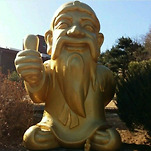
<p style="text-align: left;">하느님조차도 하지 못하는 일을, 돈이 해낸다.<br>카를 마르크스 <경제학- 철학 수고 1844> 中<br><br>What even God cannot do, money can do - Karl Marx<br><br><br>This statement is not an authentic quote from Karl Marx. It is a common misattribution or a modern adage that is sometimes mistakenly associated with him. <br><br>이 진술은 칼 마르크스의 진정한 인용문이 아닙니다. 이 진술은 때때로 그와 잘못 연관되는 일반적인 오해나 현대적 격언입니다.<br><br><br><br>While the exact quote is not found in his works, Marx did extensively analyze the power of money and its corrupting influence on society and human relationships, particularly in his early writings like the Economic and Philosophic Manuscripts of 1844<br><br>정확한 인용문은 그의 작품에서 찾을 수 없지만, 마르크스는 특히 1844년 경제학 및 철학 원고와 같은 초기 저서에서 돈의 힘과 사회 및 인간 관계에 대한 부패한 영향을 광범위하게 분석했습니다<br><br><br>He wrote about money as a universal pimp and an "alienated mediating element" that can turn impossibilities into possibilities, inverting and confusing all things.<br><br>그는 돈을 보편적인 포주이자 불가능을 가능으로 바꿀 수 있는 "소외된 중재 요소"로 묘사하며, 모든 것을 뒤집고 혼란스럽게 한다고 말했습니다.<br><br><br><br>For example, Marx wrote:<br><br>“That which is for me through the medium of money—that for which I can pay (i.e., which money can buy)—that am I myself, the possessor of the money. My own strength is as great as the power of the money. The properties of money are my properties and essential powers—the properties and powers of its possessor. Thus, what I am and am capable of is by no means determined by my individuality... I am bad, dishonest, unscrupulous, stupid; but money is honored, and hence its possessor [is, too]. Money is the supreme good, and hence its possessor is good.” <br><br><br>예를 들어, 마르크스는 이렇게 썼습니다.<br><br>"돈이라는 매개체를 통해 나에게 존재하는 것, 즉 내가 지불할 수 있는 것(즉, 돈으로 살 수 있는 것), 그것이 바로 나 자신, 즉 돈의 소유자입니다. 나의 힘은 돈의 힘만큼이나 강력합니다. 돈의 속성은 나의 속성이자 본질적인 힘, 즉 그것을 소유한 자의 속성과 힘입니다. 따라서 내가 무엇이고 무엇을 할 수 있는지는 결코 나의 개성에 의해 결정되는 것이 아닙니다... 나는 악하고, 부정직하고, 파렴치하고, 어리석습니다. 하지만 돈은 존중받으며, 따라서 돈을 소유한 자도 존중받습니다. 돈은 최고의 선이며, 따라서 돈을 소유한 자는 선합니다."<br><br><br><br><br>So, while the specific phrase "What even God cannot do, money can do" isn't his, the underlying sentiment aligns with his critiques of capitalism and the power dynamics created by currency.</p>
<!-- -->