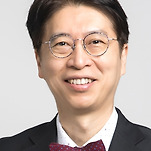
<p>한국 보수가 근본적으로 해결해야 할 3대 과제 (정동희)</p><p> </p><p>저는 근본적으로 윤석열 전 대통령이 현재 이중처벌을 받고 있다는 입장입니다.</p><p>즉, 24년12월 중앙선거관리위원회 등에 병력을 가장 많이 보낸 부문은 당시 대통령으로서 선거시스템에 의구심을 가진 상황이라면 할 수 있는 직무라고 보는데 반면 그 때 국회에도 병력을 다음으로 보낸 행위는 논쟁의 여지가 있고 그 부문을 반영하더라도 결과적으로 중도에 대통령직에서 물러남으로 정치적 처벌을 이미 충분히 받았다는 생각입니다.</p><p> </p><p>오늘은 이 질문이 아니라, 결과적으로 정권을 내어준 한국 보수가 근본적으로 해결해야 할 3대 과제에 대해 이야기드립니다.</p><p>왜냐하면 시기적으로 이 과제에 대한 청사진을 그려내지 못하면, 또 다시 악순환이 재현될 가능성이 엿보이기 때문입니다.</p><p> </p><p>첫째, 6공화국 헌법의 가장 큰 문제점인 ‘국회해산권을 대통령이 가지지 못한 점’에 대한 인식.</p><p>2024년 글로벌 측면에서 상당한 OECD국가들의 국가수반인 대통령 또는 수상(=총리)는 국회를 해산하였습니다. 영국이 그러했고 프랑스도 그러했고 일본도 그러했습니다. 반면 2024년 윤석열 대통령은 민주당이 절대 다수를 차지하고 예산도 쥐어짜고 장관후보들은 거의 모두 보이코트하는 상황에서 이에 맞서서 대통령 직무를 수행하는 카드가 다른 OECD국가들에 비해 절대적으로 없었던 상황이었음을 직시해야겠습니다.</p><p> </p><p>둘째, 왜 윤석열 대통령은 선거시스템에 대해 이야기하고 싶었는데, 정작 당시 여당 국회의원들은 중앙선거관리위원회의 세습채용 등의 이슈들은 말하면서 정작 선거시스템에 대하여 다른 OECD국가 대비 여러 부족한 점들에 대해 지적하지 못하는 모름쇠로 일관했는가? 이 부문에 대해서는 이틀 전 제 글의 상세 기술 참조 부탁드리며 여기서는 생략합니다.</p><p> </p><p>셋째, 적어도 수 년 전에는 나름 유효했던 ‘미국 맹신론’은 점차 세계 1위와 2위의 갭이 줄어들면서 그 유효성이 제한되어 가고 있고 앞으로 수 년 내에 거꾸로 ‘자주국방’ 시스템을 확보하지 못할 경우 예상치 못한 위험성이 배가되는 구조에 대한 인식이 한국 보수세력에게 지금 필요해보입니다.</p><p>2021년 말 기준, 미군 전체 현역 약 135만 명 중 약 12.8%인 17만여 명의 병력이 해외에 주둔하고 있으며, 87.2%는 미국 본토에 상주합니다. 전 세계 80개국 이상에 750개 이상의 기지를 운영하며, 주요 주둔지는 일본, 독일, 한국 등입니다.</p><p>해외 주둔 규모를 보면 전체 현역 미군 중 약 12.8%가 해외에 배치되어 있고 주요 주둔지는 일본(약 5만 명), 독일, 한국(약 2.3만~2.8만 명)이 대표적인 대규모 해외 기지가 되겠습니다.</p><p>이 3개국 중에서 일본과 독일은 세계대전 원인 제공국인 반면 한국은 원인 제공은 없었고 분단국입니다. 한국전 당시와 비교할 때 한국의 군사력은 북한 대비 당시 상황과 역전되어 비교할 수 없을 정도로 강합니다.(2024년 세계 군사력 평가에서 한국 5위, 북한 36위 기록)</p><div class="figure-img" data-ke-type="image" data-ke-style="alignCenter" data-ke-mobilestyle="widthOrigin"><img src="https://t1.daumcdn.net/cafeattach/1Y6Ej/f12134acc7e395c01deee27277ebcc3a465b225e" class="txc-image" data-img-src="https://t1.daumcdn.net/cafeattach/1Y6Ej/f12134acc7e395c01deee27277ebcc3a465b225e" data-origin-width="605" data-origin-height="350"></div><p>문제는 독일은 통독되어 세계대전 이전 지형으로 돌아갔고 한국과 중국만 세계대전 이전으로 돌아가지 못한 상황이고 이런 측면에서 점점 세계 1위와 2위의 갭이 줄어들 향후 수년간, 만약 중국이 통일 노력을 시도할 경우 현 국방자주가 안 된 상황에서는 한국이 자신의 의지와 다르게 그 전쟁에 피동적으로 끌려들어갈 위험이 제 분석 상으로 포착되고 있다는 점이 되겠습니다. 최소한 전시작전권이라도 이 위험을 조금이라도 줄이기 위해서는 환수가 필수적인데 2005년 노무현 정부에서 미국에 공식 제의하여 추진되었으며, 이후 연기를 거듭하고 있습니다.</p><p>한국 보수는 적어도 수 년 전에는 나름 유효했던 ‘미국 맹신론’이 이러한 측면에서 가져올 미래 위험에 대해 직시하려는 노력이 있어야지만, 혹시라도 향후 대선에 승리하더라도 다시 정권을 빼앗기지 않을 것이라는 저의 지적을 가볍게 생각하지 마시기 부탁드립니다.</p><p> </p><p>#한국보수3대과제, #정동희뷰</p><div class="figure-video" data-ke-type="video" data-video-url="https://kakaotv.daum.net/embed/player/cliplink/rv7pcc12u79mv79xtpsz83wq5@my?service=daum_cafe" data-video-host="kakaotv" data-video-play-service="daum_cafe" data-video-width="712" data-video-height="400" data-ke-style="alignCenter" data-video-thumbnail="https://thumb.kakaocdn.net/dna/kamp/source/rv7pcc12u79mv79xtpsz83wq5/thumbs/2.jpg?credential=TuMuFGKUIcirOSjFzOpncbomGFEIdZWK&expires=33327431269&signature=GfiebkWrbhy%2BrDT4yyaTO2hR20w%3D&ts=1770522469" data-ke-mobile-mobilestyle="widthFull" data-video-origin-width="712" data-video-origin-height="400"><iframe src="https://kakaotv.daum.net/embed/player/cliplink/rv7pcc12u79mv79xtpsz83wq5?service=daum_cafe&f=p&ptoken=eyJhbGciOiJIUzUxMiIsInR5cCI6IkpXVCJ9.eyJpZCI6InJ2N3BjYzEydTc5bXY3OXh0cHN6ODN3cTUiLCJ0aWQiOiI5M2Y0ZTU0NS05YjQxLTQ3MWEtOTllZC1lNzUzZWRiOTAwNmUiLCJhcHBfaWQiOiJkYXVtX2NhZmUiLCJleHAiOjE3OTIzNjMwMTl9.45hP0cL6aQEOi8mksALN0QMRAm0SqLl5pKwCZVCC6JRuOchje-cMA0mFOZT3-WBE9huISnxY7GeDO16_CS0liw&autoplay=0&ptoken=eyJhbGciOiJIUzUxMiIsInR5cCI6IkpXVCJ9.eyJpZCI6InJ2N3BjYzEydTc5bXY3OXh0cHN6ODN3cTUiLCJ0aWQiOiI5M2Y0ZTU0NS05YjQxLTQ3MWEtOTllZC1lNzUzZWRiOTAwNmUiLCJhcHBfaWQiOiJkYXVtX2NhZmUiLCJleHAiOjE3OTIzNjMwMTl9.45hP0cL6aQEOi8mksALN0QMRAm0SqLl5pKwCZVCC6JRuOchje-cMA0mFOZT3-WBE9huISnxY7GeDO16_CS0liw&autoplay=0" width="712" height="400" frameborder="0" scrolling="no" allowfullscreen="" allow="encrypted-media"></iframe><div class="figcaption">한국 보수가 근본적으로 해결해야 할 3대 과제 (정동희)</div></div><div class="figure-img" data-ke-type="image" data-ke-style="alignCenter" data-ke-mobilestyle="widthOrigin"><img src="https://t1.daumcdn.net/cafeattach/1Y6Ej/6da50c44c196b557bc129a64e81c6cfe68bb9cd3" class="txc-image" data-img-src="https://t1.daumcdn.net/cafeattach/1Y6Ej/6da50c44c196b557bc129a64e81c6cfe68bb9cd3" data-origin-width="725" data-origin-height="394"></div><p>Let's not forget the key players in the current state crimes of double punishment, double charges, and double personalities. <br>Three major challenges that conservatives must fundamentally address (Zheng Dong-hee) <br><br>I fundamentally believe that former President Yoon Seok-yeol is currently being punished twice. In other words, sending the largest number of troops to the National Election Commission and other organizations in December 2024 was a duty that the then-president could have fulfilled if he had been skeptical of the election system. However, sending troops to the National Assembly at the same time is controversial, and even if that were taken into account, I believe he already received sufficient political punishment by resigning from office midway. <br>(This is also in line with the ‘barbaric act of the then Attorney-General Mark Dreyfus and current Attorney-General Michelle Rowland, who directly supervised the closing proceedings of the case and designated it as confidential by the Australian government considering the importance of the case, even though Korean national Zheng Dong-hee, who reported the bribery case of the president of the State Bank of Australia in Perth, Australia to the Australian Prudential Supervision Bureau on February 6, 2024, won the civil trial in June 2024 under Australian law, and instead, did not keep all the Australian government’s promises and instead confiscated all of the whistleblower Zheng Dong-hee’s assets.) <br><br>Today, I'm not going to address this question, but rather the three major challenges that the Korean conservatives, who ultimately handed over power, must fundamentally address. This is because if they fail to develop a blueprint for addressing these challenges in a timely manner, the vicious cycle could recur. <br><br>First, recognition of the biggest problem with the current 6th Republic of Korea’s constitution: the president’s lack of the power to dissolve the National Assembly. <br>In 2024, the heads of state, either presidents or prime ministers, of many OECD countries dissolved their national parliaments. The UK, France, and Japan did the same. In contrast, President Yoon Seok-yeol must face the fact that, compared to other OECD countries, he had absolutely no leverage to carry out his presidential duties in 2024, given the Democratic Party's absolute majority, its tight budget, and its near-total boycott of ministerial candidates. <br><br>Second, why did President Yoon Seok-yeol want to talk about the election system, yet the then-ruling party lawmakers, while addressing issues like the hereditary hiring practices of the National Election Commission, consistently remained ignorant, failing to point out the various shortcomings of the election system compared to other OECD countries? Please refer to my article from two days ago for a detailed explanation of this matter, and I will omit it here. <br><br>Third, the "American blind faith" theory, which was somewhat effective at least a few years ago, is gradually losing its effectiveness as the gap between the world's top two nations narrows. Furthermore, Korean conservatives need to recognize the structure that, if they fail to secure an "independent national defense" system in the coming years, the unexpected risks will multiply. <br>As of the end of 2021, approximately 170,000 troops, or 12.8% of the approximately 1.35 million active-duty US military personnel, are stationed overseas, with 87.2% residing in the continental United States. The US operates over 750 bases in over 80 countries worldwide, with major bases in Japan, Germany, and South Korea.  <br>In terms of overseas deployment scale, approximately 12.8% of active-duty US troops are stationed overseas, with Japan (approximately 50,000 troops), Germany, and South Korea (approximately 23,000 to 28,000 troops) being the major overseas bases. Of these three countries, Japan and Germany contributed to World War II, while South Korea did not and remains a divided nation. Compared to the Korean War, South Korea's military power is incomparably stronger than North Korea's, a reversal of its position at the time. (In the 2024 global military power rankings, South Korea ranked 5th, while North Korea ranked 36th.) <br>The problem is that Germany has been reunified and returned to its pre-World War II state, while only Korea and China have not been able to return to their pre-World War II state. In this respect, the gap between the world's top two countries will gradually narrow in the coming years. In my analysis, if China attempts unification, there is a risk that Korea, which is not currently self-reliant in defense, will be passively drawn into that war against its will. <br>At the very least, the return of wartime operational control is essential to mitigate this risk, even if only slightly. This proposal was officially proposed to the United States by the Roh Moo-hyun administration in 2005, but has since been repeatedly delayed. <br><br>South Korean conservatives must at least make an effort to confront the future risks posed by their "blind faith in the United States," which was effective a few years ago. However, please do not dismiss my assertion that, even if they win the next presidential election, they will not lose power again.</p><p> </p><div class="figure-img" data-ke-type="image" data-ke-style="alignCenter" data-ke-mobilestyle="widthOrigin"><img src="https://t1.daumcdn.net/cafeattach/1Y6Ej/850acc437ded3ff3738b539936ef984b5693b582" class="txc-image" data-img-src="https://t1.daumcdn.net/cafeattach/1Y6Ej/850acc437ded3ff3738b539936ef984b5693b582" data-origin-width="608" data-origin-height="516"><div class="figcaption">‘barbaric act of the then Attorney-General Mark Dreyfus and current Attorney-General Michelle Rowland, who directly supervised the closing proceedings of the case and designated it as confidential by the Australian government considering the importance of the case, even though Korean national Zheng Dong-hee, who reported the bribery case of the president of the State Bank of Australia in Perth, Australia to the Australian Prudential Supervision Bureau on February 6, 2024, won the civil trial in June 2024 under Australian law, and instead, did not keep all the Australian government’s promises and instead confiscated all of the whistleblower Zheng Dong-hee’s assets.</div></div><p><span style="color: #000000; background-color: #ffffff;" data-ke-size="size16">#MarkDreyfus,  #MichelleRowland</span></p>
<!-- -->