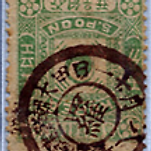
<p><a style="color: #333333; background-color: #ffffff;" href="https://cafe.naver.com/f-e/cafes/11329722/articles/416587?boardtype=L&referrerAllArticles=true" target="_top" class="ke-link">핼리혜성 우표 카탈로그</a></p><p> </p><p>Halley's Comet - 1.0 - English version.pdf</p><div class="figure-img" data-ke-type="image" data-ke-style="alignCenter" data-ke-mobilestyle="widthOrigin"><img src="https://t1.daumcdn.net/cafeattach/1ZZxL/9416686078a372e5568d65e6701e98bcd9577e9f" class="txc-image" data-img-src="https://t1.daumcdn.net/cafeattach/1ZZxL/9416686078a372e5568d65e6701e98bcd9577e9f" data-origin-width="929" data-origin-height="766"></div><p>Stamp Catalog Halley's Comet Version 1.0, 2025 © edmund.poscher@liwest.at 1 How this catalogue was created For a collector it is always important to know WHAT there is to collect in his Collection. And all the data should be easy to record and then presented clearly. I have tested a few management programs, but unfortunately none of them really convinced me. Everyone has their own ideas... Over the course of my years as a collector, I wrote my own management programs for stamps, special cancellations and postal stationery. There is also one for coins, which is the main passion of my collecting. I always wanted to create my own catalogs of certain topics, so I added such a feature to the programs. The present catalogue is a result of this. I am happy to pass this catalogue on to you free of charge. Enjoy it! There is one restriction: the catalogue may not be sold. Of course, there should also be an update of this catalogue. To this end, I request you: Tell me about new releases Let me know about missing issues Please let me know any additional information, such as print run, designer, printer, etc. Not or only partially included in the catalogue: Illegale issues: There are plenty of issues that were not commissioned by the respective post office and they were not included in the catalogue. It is possible that there are still one or two illegal editions in the catalogue. Please let me know about this. British Antarctic Territories: The Halley Station issues have not been added to the catalogue, with the exception of those that have a direct reference to the comet or to Edmond Halley. The mission STS-61-C (Space shuttle Columbia, launched January 12, 1986) one of the mission’s tasks was to observe Halley’s Comet. However, this could not be done due to battery problems with the camera. No stamps appeared on the topic. Issues on the Challenger STS-51-L disaster (launched January 28, 1986). One of the tasks of this mission was to observe Halley's Comet using various tools (satellite "Halley's Comet Experiment Deployable" (HCED)). 73 seconds after launch, the space shuttle broke apart, killing all seven crew members. Here I have only included those issues in the catalogue that have a direct connection to the topic, such as when the mission logo is shown, where the comet is graphically depicted in the top centre. The STS-61-E mission was a NASA Space Shuttle (Columbia) mission scheduled to launch on March 6, 1986. It was cancelled after the Challenger disaster. Columbia was to carry the ASTRO-1 observatory, which was to be used for astronomical observations, including observations of Halley's Comet. I am not aware of any stamps, but if there are any, please let me know. If you know of other editions that are not included in the catalogue, please let me know. Star of Bethlehem: The Italian painter Giotto di Bondone witnessed the appearance of Halley's Comet in 1301 AD. Then he painted the Star of Bethlehem as a brightly shining comet above Jesus in the manger (painting "The Adoration of the Magi"). There are a lot of stamps with the Star of Bethlehem, but none of them were included in the catalogue. 2 Tigranes the Great: Tigranes II, better known as Tigranes the Great, was king of Armenia and the symbol between the two eagles on his crown may represent Halley's Comet. These issues were not included in the catalogue. Some information about Halley's Comet Halley's Comet officially 1P/Halley, has long been one of the most famous comets. It is very bright and can be seen in the sky with the naked eye. It returns on average every 75.3 years. It last came close to Earth in 1986 and its next return is calculated for the year 2061. Below you will find a list from 240 BC. Its highly elliptical orbit causes it to move back and forth between the orbits of Neptune and Mercury. If it is far out, only modern devices can detect it. It only has a tail when it is close to the sun, and that makes it appear larger. Orbit: Halley has a very elongated elliptical orbit that extends from the point closest to the Sun (perihelion) at 0.586 AU between the orbits of the planets Mercury and Venus to the point farthest from the Sun (aphelion) at 35.082 AU in the region of Neptune's orbit. The inclination of its orbit to the ecliptic is 162.262°. The orbital period varies because the orbit is influenced by the gravity of other bodies, especially Jupiter. Between 1835 and 1910 it was less than 75 years and between 1222 and 1301 it was 79 years. The orbital speed at perihelion (February 9, 1986 at 6:40 UTC) was 54.57 km/s; the speed at aphelion: 0.91 kilometers per second. Data on the comet's nucleus: The mean diameter is 15.3 × 7.2 × 7.2 km; mass: 2 · 1014 kg; medium density: 0,55 g/cm³; 0,05 Albedo (reflected radiation). Constant loss of matter: Comets are often visible to the naked eye when they are close to the Earth or the Sun, but if they have short orbital periods they lose brightness over the centuries. This is due to the release of gases and dust from the comet's nucleus when the sun's radiation becomes more intense. The material that is subsequently responsible for the formation of the coma and tail is "blown away" by the solar wind and is thus irretrievably lost to the comet. For Halley's comet, loss rates of more than 50 kg per second were determined when it was close to the Sun - the total material loss during the last approach to the Sun in 1986 was 500 million tonnes (5 * 1011 kg), i.e. 0.25% of its total mass. The Exploration of the Comet 1986 In 1986, Halley's comet was once again close to Earth. Six space probes set out to explore and observe it from close up: The Soviet Union sent two probes to it, Vega 1 and 2. The two first went to Venus and placed two landers there. They then made their way to Halley. In March 1986 they approached it to within about 8,000 kilometers. In 1985, Japan launched the space probe Sakigake (Pioneer) with three observation instruments on board. In March 1986, the probe passed Halley at a distance of 7 million kilometers. There may have been a navigation error that meant Sakigake could only study Halley from a distance. Sakigake would later visit two more comets, but it ran out of fuel en route and lost contact with Earth. Japan sent a second probe to Halley in 1985. This one was called Suisei (comet in English) and was constructed in the same way as Sakigake, but had other observation instruments. Suisei also approached the3 comet in March 1986 and was 151,000 kilometers away. The probe sent its observation data to Earth and was then supposed to travel to two more comets. It also ran out of fuel en route. In the preparation phase, the mission was known as Planet-A. The European Space Agency ESA (European Space Agency) carried out the most successful mission to Halley with the space probe Giotto. Giotto (named after a medieval painter who immortalized Halley's Comet in a famous painting in 1301) was launched on July 2, 1985, and came within 600 kilometers of Halley's Comet on March 14, 1986. Despite this distance, some instruments were damaged and the probe began to roll, but was soon stabilized again. Fortunately, the data and images acquired previously had already been sent live to Earth, so that despite the failures, Giotto delivered a large amount of data and provided new insights into the comet. ISEE (International Sun Earth Explorer) was a space project of NASA and ESA to study the solar wind and its interaction with the Earth's outer magnetosphere. ISEE 3 was sent to the comets Giacobini-Zinner and Halley under the name ICE (International Cometary Explorer). ICE reached Giacobini-Zinner on September 11, 1985, passing undamaged through its tail 7800 km beyond its nucleus, successfully taking measurements, and then passed Halley's Comet on March 28, 1986, at a distance of 28 million km. What new insights did all these missions provide: The nucleus of the comet is about 15 km long, 7-10 km wide and peanut shaped. Halley is darker than coal and has a very low albedo, which is probably due to the large amounts of dust on its surface. All we can see in the sky is its bright tail, which the comet develops near the sun. The emitted material consists of 80% water, 10% carbon monoxide, and the rest methane, ammonia and various other elements. Although the center of the core is mostly ice, surface temperatures can reach a comfortable 27 degrees Celsius. This apparent contradiction is due to the presence of a thin, insulating, black, porous and refractory crust. The comet loses about 50 kg of material per second when it is close to the sun! In total, this was 500 million tons in 1986! The gas and dust that make up the cauda are produced by jets emanating from crater-like structures on the side of the comet closest to the Sun. The famous comet, so often described as a "dirty snowball," is more than that. It is also a dark body, shaped like a peanut and with an amazingly warm and porous surface that spews jets of gas and dust into space. One of the scientists who worked on the development of the Giotto probe rightly said: "It's time to review the books on the comet." By the time of the comet's return in 1986, astronomical telescopes and associated instruments were far more sensitive than at any previous apparition.</p><p> </p><p> </p><p> </p><p> </p><p>List of countries including number of issues</p><p>No Country        Year                               Number</p><p>1 Aitutaki 1985, 1986, 1990                       3</p><p>2 Ajman         1972                                    1</p><p>3 Anguilla      1986                                    1</p><p>4 Antigua and Barbuda 1986, 1986, 1999, 2000       4</p><p>5 Antigua and Barbuda - Redonda 1986   1</p><p>6 Ascension 1986, 2006                             2</p><p>7 Australia    1986                                      1</p><p>8 Barbuda 1986, 1986                               2</p><p>9 Belarus              2000                            1</p><p>10 Belize             1986                              1</p><p>11 Benin 1986, 1995 2</p><p>12 Bermuda 1985 1</p><p>13 Bhutan 1986 1</p><p>14 Bolivia 1985, 1986, 1986, 2014 4</p><p>15 Botswana 1986 1 16 Brazil 1986 1 17 British Antarctic Territory 1986 1 18 Bulgaria 1986, 1987 2 19 Cambodia 1986, 1994 2 20 Central African Republic 1982, 1984, 1985, 1986, 1986, 1986, 1987, 1996, 2013 9 21 Chad 1997, 1999, 2009, 2020 4 22 Chile 1985 1 23 China, Peoples Republic 1986 1 24 Christmas Island 1986 1 25 Ciskei 1986 1 26 Comoros 1986, 1988, 1996 3 27 Congo, Republic 1986, 2011, 2016 3 28 Cook Islands 1986, 1987, 2015 3 29 Cote d'Ivoire (Ivory Coast) 1986, 2012 2 30 Cuba 1987, 1988 2 31 Cyprus 1986, 1991 2 32 Czechoslovakia 1985, 1987 2 33 Djibouti 1984, 1986 2 34 Dominica 1986, 1986, 2006 3 35 Fiji 1986 1 36 France 1986 1 37 Gambia 1986, 1986, 1999, 2003, 2006, 2007 6 38 Georgia - Abchasien 1996, 1999 2 39 German Federal Republic 1986 1 40 Ghana 1987, 1989, 2000, 2007 4 41 Great Britain 1986, 2002 2 42 Grenada 1986, 1986, 1989, 1994, 1999, 2006, 2007 7 43 Grenada-Carriacou & Petite Martinique 2000 1 44 Grenada-Grenadines 1986, 1986, 1986, 1987 4 45 Guinea 1986, 1986, 1988, 1989, 1998, 2007, 2007, 2010 8 46 Guinea-Bissau 1981, 1986, 2011 3 10 No Country Year Number</p><p>47 Guyana 1986, 1989, 1994, 1999, 2000     5종</p><p>48 Hong Kong 1986 1종</p><p>49 Hungary 1986, 1986 2</p><p>50 India 1985    1</p><p>51 Ireland 1991 1</p><p>52 Japan 2000      1종</p><p>53 Jersey 1986     1</p><p>54 Korea (North) 1985, 1985, 1999, 2001, 2004 5종</p><p>55 Korea (South) 1986 1종</p><div class="figure-img" data-ke-type="image" data-ke-style="alignCenter" data-ke-mobilestyle="widthOrigin"><img src="https://t1.daumcdn.net/cafeattach/1ZZxL/dcb81029f275339854b412e80f96d24c6cbb7a0f" class="txc-image" data-img-src="https://t1.daumcdn.net/cafeattach/1ZZxL/dcb81029f275339854b412e80f96d24c6cbb7a0f" data-origin-width="792" data-origin-height="768"></div><p> </p><p> </p><p>56 Laos 1986 1</p><p>57 Lesotho 1986 1</p><p>58 Liberia 2016 1</p><p>59 Macedonia 2017 1 60 Madagascar 1985, 1986, 1987, 1990, 1992 5 61 Malawi 1986 1 62 Maldives 1985, 1986, 1986, 1986, 2006 5 63 Mali 1986, 1996, 1999, 1999, 2010, 2011 6 64 Marshall Islands 1985, 2018 2 65 Mauritania 1986, 1986 2 66 Mauritius 1986 1 67 Mexico 1986 1 68 Micronesia 1986, 1999 2 69 Monaco 1986, 2005, 2008 3 70 Mongolia 1986 1 71 Montserrat 1986, 1987 2 72 Mozambique 1986, 2006, 2011 3 73 Nauru 2006 1 74 Nevis 2000 1 75 Nicaragua 1985, 1994 2 76 Niger 1985, 1997, 1998, 2001, 2021 5 77 Niuafo'ou-Island 1986, 2017 2 78 Niue 1986 1 79 Norfolk Islands 1986 1 80 Norway 2006 1 81 Palau 1985, 2000 2 82 Panama 1986 1 83 Paraguay 1985, 1986, 1986 3 84 Penrhyn-Island 1986 1 85 Peru 1987 1 86 Philippines 1986, 1988 2 87 Poland 1986 1 88 Portugal 1986 1 89 Romania 1986, 2016 2 90 Rwanda 2009, 2012 2 91 Saint Helena, Ascension and Tristan da Cunha 1977, 1986 2 92 Saint Kitts and Nevis 2007 1 93 Saint Vincent and Grenadines 1986 1 94 Saint Vincent and Grenadines - Bequia 2007 1 11 No Country Year Number 95 Samoa 1986 1 96 San Marino 1986 1 97 Sao Tome and Principe 1986, 2006, 2008, 2015 4 98 Seychelles 1986 1 99 Sierra Leone 1986, 1986, 2006 3 100 Slovakia 1939 1 101 Solomon-Islands 1986, 2006 2</p><p>102 Soviet Union 1984, 1985, 1985, 1986, 1986 5</p><p>103 Sri Lanka 1986 1</p><p>104 Suriname 1986 1 105 Swaziland 1986 1 106 Switzerland 1991 1 107 Togo 1986, 1986, 2013, 2013 4 108 Tonga 1986, 2017 2 109 Tristan da Cunha 1986 1 110 Turkish Cyprus 1986 1 111 Turks and Caicos Islands 1985, 1996 2 112 Uganda 1986, 1986 2 113 Ukraine 2006 1 114 Vanuatu 1986 1 115 Vietnam 1986 1 116 Wallis and Futuna 1986 1 117 Zaire 1996 1 118 Zambia 1986, 1987 2 Key to symbols Ï=Designer z =Printing company National currencies Under the country's flag you will find the currency(ies) of the respective country. Only those</p><p>Consequently, the International Halley Watch (IHW) was established to encourage, standardize, collect and archive observations of the comet. This effort was endorsed by the International Astronomical Union in 1982, and comet scientists were selected as subject matter specialists in the fields of astrometry, infrared studies, large-scale phenomena, near-nuclear studies, photometry and polarimetry, radio studies, spectroscopy and spectrophotometry, meteor studies, and amateur observations. The IHW also coordinated the space missions to comets Giotto by the European Space Agency and Vega by the Soviet Union and cooperating countries. The collected data were subsequently published as a digital archive on CD-ROMs.</p>
<!-- -->