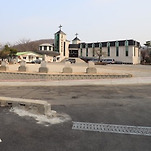
<p><span style="color: #006dd7;" data-ke-size="size20"><b>The commemorative gathering included a Holy Mass attended by relatives of the martyred missionaries</b></span></p><div class="figure-img" data-ke-type="image" data-ke-style="alignCenter" data-ke-mobilestyle="widthOrigin"><img src="https://t1.daumcdn.net/cafeattach/1Bg5E/4a039d534bf43c5467b0eb0e89f4dccdde972f56" class="txc-image" data-img-src="https://t1.daumcdn.net/cafeattach/1Bg5E/4a039d534bf43c5467b0eb0e89f4dccdde972f56" data-origin-width="960" data-origin-height="500"></div><p>The descendants of priests who were martyred in the Korean War take a commemorative photo next to the 'June 25 St. Colomban Martyrdom Monument' on May 23. (Photo: Lee Hyung-joon/<a href="https://www.catholictimes.org/article/20250526500247" target="_blank" class="ke-link">catholictimes.org</a>)</p><div class="figure-img" data-ke-type="image" data-ke-style="alignCenter" data-ke-mobilestyle="widthOrigin"><img src="https://t1.daumcdn.net/cafeattach/1Bg5E/bb7a36699eb1c7aa48639ccad481cd38e323530c" class="txc-image" data-img-src="https://t1.daumcdn.net/cafeattach/1Bg5E/bb7a36699eb1c7aa48639ccad481cd38e323530c" data-origin-width="171" data-origin-height="171"></div><p><a style="color: #ffffff;" href="https://www.ucanews.com/author/uca-news-reporter" target="_top" class="ke-link">By UCA News reporter</a></p><p>Published: May 28, 2025 12:39 PM GMT</p><p><span data-ke-size="size18">Updated: May 29, 2025 10:01 AM GMT</span></p><p> </p><p><span data-ke-size="size20">A Catholic missionary society in<span> </span><a href="https://www.ucanews.com/directory/country/korea/16?utm_source=in-pg-referral&utm_medium=in-pg-referral&utm_campaign=in-pg-referral&utm_id=in-pg-referral" target="_blank" class="ke-link">South Korea</a><span> </span>marked the 75th anniversary of the martyrdom of its seven priests during the Korean War, who have been declared Servants of God by the Vatican.</span></p><p> </p><p><span data-ke-size="size20">The May 23 event, organized by the  Korean branch of the Missionary Society of Saint Columban in the national capital, Seoul, included a commemorative Holy Mass attended by relatives of the martyred missionaries.</span></p><p> </p><p><span data-ke-size="size20">Columban missionary priest Daniel Kiback, who presided over the Holy Mass, said the martyred priests lived in Korea and gave witness to faith with their lives, "even amid the horrors of war.”</span></p><p> </p><p><span data-ke-size="size20">The seven Columban priests declared Servants of God are Anthony Collier, James Maginn, Patrick Reilly, Patrick Brennan, Thomas Cusack, John O’Brien, and Francis Canavan.</span></p><p> </p><p><span data-ke-size="size20">They have been grouped with Bishop Francis Borgia Hong Yong-ho of Pyongyang and 80 companions, who were killed in persecutions from 1901 to the mid-20th century and are under consideration for beatification and potential sainthood.</span></p><p> </p><p><span data-ke-size="size20">The “Servant of God” title is formally given when the diocesan process has been completed, and the records are sent to the Holy See’s Congregation for the Causes of Saints.</span></p><p> </p><p><span data-ke-size="size20">The later stages include declaring the person venerable, blessed, and finally canonization, which officially elevates the individual to the status of a saint.</span></p><p> </p><p><span data-ke-size="size20">According to the Columban missionary society’s official website, six of them were martyred by the North Korean Communist troops, and one died in prison.</span></p><div class="figure-img" data-ke-type="image" data-ke-style="alignCenter" data-ke-mobilestyle="widthOrigin"><img src="https://t1.daumcdn.net/cafeattach/1Bg5E/1f90c53874cf1ba9df6b0db4ffbe02992c7c4510" class="txc-image" data-img-src="https://t1.daumcdn.net/cafeattach/1Bg5E/1f90c53874cf1ba9df6b0db4ffbe02992c7c4510" data-origin-width="675" data-origin-height="110"></div><p><span data-ke-size="size20">The society’s website stated that two of their members had survived the infamous Death March to North Korea.</span></p><p> </p><p><span data-ke-size="size20">The Columban society presented a commemorative plaque to the relatives after the Holy Mass.</span></p><p> </p><p><span data-ke-size="size20">During a meeting after Mass, relatives shared their memories of the martyrs and their experiences related to them.</span></p><p> </p><p><span data-ke-size="size20">Stefanie McNamara, who was five when Cusack was martyred in 1950, said she remembered “vividly” the last time her uncle flew back to Korea from Ireland after a vacation, and “the news of his death.”</span></p><p> </p><p><span data-ke-size="size20">“Whenever Korean believers held our hands and said, 'thank you' to us, it was an indescribable feeling,” McNamara said.</span></p><p> </p><p><span data-ke-size="size20">“It filled my heart with joy, and I feel like I can return to Ireland with a grateful heart,” she added.</span></p><p> </p><p><span data-ke-size="size20">Cusack is believed to have been martyred in Mokdong, Daejeon, in September 1950.</span></p><p><span data-ke-size="size20">The relatives who arrived in South Korea on May 19 had met<span> </span><a href="https://www.ucanews.com/directory/bishops/archbishop-ok/677?utm_source=in-pg-referral&utm_medium=in-pg-referral&utm_campaign=in-pg-referral&utm_id=in-pg-referral" target="_blank" class="ke-link">Archbishop Simon Ok Hyun-jin</a><span> </span>of Gwangju and Bishop Simon Kim Ju-young of Chuncheon.</span></p><p> </p><p><span data-ke-size="size20">They also visited the Society of the Divine Word in Mokdong, Daejeon, and the Soyangro Cathedral in Chuncheon, which are considered the alleged places of death of the martyrs.</span></p><p> </p><p><span data-ke-size="size20">The Columban missionaries arrived in Korea in 1933 at the invitation of the Paris Foreign Missions (MEP), specifically Bishop Florian-Jean-Baptiste Demange of the Daegu Diocese.</span></p><p> </p><p><span data-ke-size="size20">Following the end of<span> </span><a href="https://www.ucanews.com/directory/country/japan/14?utm_source=in-pg-referral&utm_medium=in-pg-referral&utm_campaign=in-pg-referral&utm_id=in-pg-referral" target="_blank" class="ke-link">Japan</a>’s imperial rule (1905-45), Korea was divided into two parts by the United States and the Soviet Union after World War II.</span></p><p> </p><p><span data-ke-size="size20">Several efforts to unify Korea failed over disagreements between the US and Soviet regimes and resulted in the Korean War (1950-53).</span></p><p> </p><p><span data-ke-size="size20">North Korean communist forces invaded the South during the war, and brutal conflict left some 4 million dead and about 10 million families displaced.</span></p><p> </p><p><span data-ke-size="size20">The war ended with an armistice, not a war treaty, on July 27, 1953. It means the nations are technically still at war.</span></p><p> </p><p><span data-ke-size="size20">According to the South Korean Truth and Reconciliation Commission’s report, North<span> </span><a href="https://www.ucanews.com/directory/country/korea/16?utm_source=in-pg-referral&utm_medium=in-pg-referral&utm_campaign=in-pg-referral&utm_id=in-pg-referral" target="_blank" class="ke-link">Korea</a>’s military murdered 1,145 Christians, including 119 Catholics and 1,026 Protestants, during their retreat from the South following military operations by United Nations forces that began on Sept. 26, 1950.</span></p><p> </p><p><span data-ke-size="size20"><i>This report is brought to you in partnership with Catholic Times of Korea</i></span></p>
<!-- -->