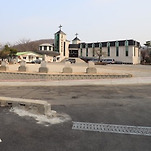
<p><span style="color: #006dd7;" data-ke-size="size20"><b>Local parish provided care and accompaniment in the form of material and spiritual aid for the past 27 years</b></span></p><div class="figure-img" data-ke-type="image" data-ke-style="alignCenter" data-ke-mobilestyle="widthOrigin"><img src="https://t1.daumcdn.net/cafeattach/1Bg5E/6c44d05851151e8a65da62898224dd44414746c0" class="txc-image" data-img-src="https://t1.daumcdn.net/cafeattach/1Bg5E/6c44d05851151e8a65da62898224dd44414746c0" data-origin-width="960" data-origin-height="500"></div><p>A view of the demolished houses in Seoul’s Baeksa Village, which is currently undergoing redevelopment that is slated to be completed by 2029. (Photo: Lee Ho-jae / <a href="https://www.catholictimes.org/article/20250905500148" target="_blank" class="ke-link">Catholic Times of Korea</a>)</p><div class="figure-img" data-ke-type="image" data-ke-style="alignCenter" data-ke-mobilestyle="widthOrigin"><img src="https://t1.daumcdn.net/cafeattach/1Bg5E/d64b38981e16a97704c06014180b5f37651b9a18" class="txc-image" data-img-src="https://t1.daumcdn.net/cafeattach/1Bg5E/d64b38981e16a97704c06014180b5f37651b9a18" data-origin-width="171" data-origin-height="171"></div><p><a style="color: #ffffff;" href="https://www.ucanews.com/author/uca-news-reporter" target="_top" class="ke-link">By UCA News reporter</a></p><p>Published: September 15, 2025 12:03 PM GMT</p><p><span data-ke-size="size18">Updated: September 15, 2025 12:06 PM GMT</span></p><p> </p><p><span data-ke-size="size20">Catholics of a parish and residents of a nearby slum, which undergoes redevelopment in South Korea, recall the times of support and solidarity they shared, while promising to continue accompanying each other and the new residents.</span></p><p> </p><p><span data-ke-size="size20">Baeksa Village, formed in the late 1960s and known as the national capital Seoul’s “last slum,” is undergoing a massive redevelopment.</span></p><p> </p><p><span data-ke-size="size20">The village is set to host a nature-friendly residential complex for 3,178 households featuring for-sale and rental housing.</span></p><p> </p><p><span data-ke-size="size20">Construction, which will start in the latter half of this year, is scheduled for completion in the first half of 2029.</span></p><p> </p><p><span data-ke-size="size20"><b>Church’s constant accompaniment</b></span></p><p> </p><p><span data-ke-size="size20">Residents like Elizabeth Jeon Jeong-sun recall how parishioners of the Junggye Yangup Parish under the Seoul Archdiocese stood by them.</span></p><p> </p><p><span data-ke-size="size20">“The parish community was always the first to help in the village,” says Jeon, who was a resident at Baeksa Village for 45 years.</span></p><p> </p><p><span data-ke-size="size20">“They packed lunches every week, fixed our houses, and we'd grill meat together with the priest. I miss those times and the neighbors,” she adds.</span></p><div class="figure-img" data-ke-type="image" data-ke-style="alignCenter" data-ke-mobilestyle="widthOrigin"><img src="https://t1.daumcdn.net/cafeattach/1Bg5E/d5483087504af233a6bb9cb1f5aa0ac64bc746b3" class="txc-image" data-img-src="https://t1.daumcdn.net/cafeattach/1Bg5E/d5483087504af233a6bb9cb1f5aa0ac64bc746b3" data-origin-width="675" data-origin-height="125"></div><p><span data-ke-size="size20">Like many others from the village, Jeon recalls how the parish supported them through lunchbox deliveries, home repairs, caring for the sick, and visiting the households to speak to them.</span></p><p> </p><p><span data-ke-size="size20">Some of the other initiatives from the parish include providing scholarships to students, offering financial assistance to those in need, and offering coal briquette services.</span></p><p> </p><p><span data-ke-size="size20">The Junggye Yangup Parish started supporting the slum’s residents in 1998 after it separated from Sanggye 2-dong Parish, and it has continued to relentlessly do so for the last 27 years.</span></p><p> </p><p><span data-ke-size="size20">The parish had primarily reached out to the slum’s residents through its charitable associations, giving them much-needed assistance, both materially and spiritually.</span></p><p> </p><p><span data-ke-size="size20">But the residents made sure to give back as much as they received, showing Christian charity that extended beyond their social status and religious backgrounds.</span></p><p> </p><p><span data-ke-size="size20"><b>'Love Tea House'</b></span></p><p> </p><p><span data-ke-size="size20">Simon Yang Si-mo, the former president of the parish’s St. Vincent de Paul Society, recalls how the slum residents tried to help.</span></p><p> </p><p><span data-ke-size="size20">“When we went to deliver lunch boxes, residents would fill empty bowls with vegetables or sweet potatoes, or make sure to give us even a thousand or two thousand won,” says Yang.</span></p><p><span data-ke-size="size20">Yang pointed out that the “Love Tea House” initiative started by the parish to help those in need received a warm response from the locals.</span></p><p> </p><p><span data-ke-size="size20">“Those who had received lunch boxes would come and put money in the donation box before leaving,” Yang recalls.</span></p><p> </p><p><span data-ke-size="size20">The same spirit of charity was exhibited by the residents during the Christmas season, which is also widely known as “the season of giving,” recalls Veronica Son Eun-sook.</span></p><p> </p><p><span data-ke-size="size20">"When we walked around the village singing carols with the children, the elders would give us fish cakes or steamed buns,” says Son, who taught catechism at the parish’s Sunday School.</span></p><p> </p><p><span data-ke-size="size20">“On our way back, they would always press a little money into our hands, saying, 'Buy the children a snack,’” Son adds.</span></p><p> </p><p><span data-ke-size="size20"><b>Pain of parting</b></span></p><p> </p><p><span data-ke-size="size20">Theresa Moon Jeong-ran, another member of the parish, says parting ways with the residents was very painful because of the unique bond they shared.</span></p><p> </p><p><span data-ke-size="size20">“When redevelopment began in earnest and we had to stop the service, some residents hugged me and cried, saying, ‘We looked forward to seeing your faces every week more than the lunch boxes,’” Moon says.</span></p><p> </p><p><span data-ke-size="size20">Moon says the residents had expressed deep sorrow that they might not see each other again.</span></p><p> </p><p><span data-ke-size="size20">“Whenever I see an empty house, I want to ask how the elderly residents are doing and if they're in good health,” says Moon.</span></p><p> </p><p><span data-ke-size="size20">To express their grief and appreciation of the bond that they had with the slum residents, the parish set up a bulletin board for parishioners to share their memories.</span></p><p> </p><p><span data-ke-size="size20">The parishioners wrote their messages on Post-it notes and pasted them on the board.</span></p><p><span data-ke-size="size20">The remarks on the board include statements such as the village was “dearly missed and cherished,” a space where “everyone became one,” and “a beautiful memory for all.”</span></p><p> </p><p><span data-ke-size="size20"><b>Preparing for future</b></span></p><p> </p><p><span data-ke-size="size20">As the development is poised to end by 2029 and residents – both new and old – are expected to arrive, the Junggye Yangup Parish is preparing to welcome everyone.</span></p><p> </p><p><span data-ke-size="size20">While the parish is expected to have more than 300 new members, Father Jeon Ho-yeop, the parish priest, says efforts to welcome them are underway.</span></p><p> </p><p><span data-ke-size="size20">“We are preparing so that believers from diverse backgrounds can form a community within the faith without feeling alienated,” says Jeon Ho-yeop.</span></p><p> </p><p><span data-ke-size="size20">The parish is set to launch a pilgrimage on Sept. 21, followed by parish and district-level meetings, retreats, and other activities to welcome the parishioners.</span></p><p> </p><p><span data-ke-size="size20">“Within the next three years, we will expand necessary spaces like catechism rooms and restrooms, while listening to and supporting the voices of returning residents,” Jeon Ho-yeop adds.</span></p><p> </p><p><span data-ke-size="size20">Amid the rumble of machinery engaged in reshaping the slum’s terrain, the residents of Baeksa Village believe that their bond will remain alive in their hearts and minds as bittersweet memories no matter where they are.</span></p><p> </p><p><span data-ke-size="size20"><i>*This is a translated and edited version of the report that was published by the Catholic Times of Korea on Sept. 14.</i></span></p>
<!-- -->