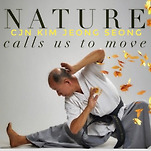
<p style="text-align: left;"></p><div class="figure-img" data-ke-type="image" data-ke-style="alignCenter" data-ke-mobilestyle="widthOrigin"><img src="https://t1.daumcdn.net/cafeattach/1XBdW/a621f5efc0f21a11cabe0d40e1e2a30282c8c7e6" class="txc-image" data-img-src="https://t1.daumcdn.net/cafeattach/1XBdW/a621f5efc0f21a11cabe0d40e1e2a30282c8c7e6" data-origin-width="1024" data-origin-height="1536"></div><p style="text-align: left;"><br>In Korean 한글 번역<br><a href="https://m.cafe.daum.net/enlightenment-k/dcM5/476?svc=cafeapp" target="_blank" class="ke-link">https://m.cafe.daum.net/enlightenment-k/dcM5/476?svc=cafeapp</a></p><div class="figure-open" contenteditable="false" data-ke-type="opengraph" data-ke-align="alignCenter" data-og-type="website" data-og-title="🌏 진영쌍검류 통합 철학 시리즈 총 4편 중 - 제3편과 제4편" data-og-description="여기를 눌러 링크를 확인하세요" data-og-host="m.cafe.daum.net" data-og-source-url="https://m.cafe.daum.net/enlightenment-k/dcM5/476?svc=cafeapp" data-og-url="https://m.cafe.daum.net/enlightenment-k/dcM5/476?svc=cafeapp" data-og-image="http://scrap.kakaocdn.net/dn/32NRA/bl4Pmc2kfAz/DuD8Ns0ty5NHAjJmSKAqd1/kakaolink40_original.jpg?width=828&height=793"><a href="https://m.cafe.daum.net/enlightenment-k/dcM5/476?svc=cafeapp" target="_blank" data-source-url="https://m.cafe.daum.net/enlightenment-k/dcM5/476?svc=cafeapp"><div class="og-image"><img class="thumb_img" src="http://scrap.kakaocdn.net/dn/32NRA/bl4Pmc2kfAz/DuD8Ns0ty5NHAjJmSKAqd1/kakaolink40_original.jpg?width=828&height=793" alt="" xxxxonerror="this.src="//img1.kakaocdn.net/thumb/C200x200/?fname=https%3A%2F%2Ft1.daumcdn.net%2Fcafe_image%2Fcafe_meta_image_190529.png""></div><div class="og-text"><p class="og-title">🌏 진영쌍검류 통합 철학 시리즈 총 4편 중 - 제3편과 제4편</p><p class="og-desc">여기를 눌러 링크를 확인하세요</p><p class="og-host">m.cafe.daum.net</p></div></a></div><p style="text-align: left;"><br><br>🔷 Subject :<br><br>Jinyoung Ssangkum Ryu Integrative Philosophy Series – Part 3 & 4 of total 4<br><br>---<br><br></p><div class="figure-img" data-ke-type="image" data-ke-style="alignCenter" data-ke-mobilestyle="widthOrigin"><img src="https://t1.daumcdn.net/cafeattach/1XBdW/db78e18e9daa82933cd48e3591b97dd2b580dfa0" class="txc-image" data-img-src="https://t1.daumcdn.net/cafeattach/1XBdW/db78e18e9daa82933cd48e3591b97dd2b580dfa0" data-origin-width="1024" data-origin-height="1536"></div><p style="text-align: left;"><br><br>📕 Part 3: Kimu Practice and Healing<br><br>Subtitle: The Practice of Healing and Integration Encountered Across Cultures<br><br><br>---<br><br>1. Becoming Aware of Ki – Sensing Beyond Movement<br><br>Kimu practice is not about moving the body by willpower.<br>It is a training of perceiving and following the flow of energy.<br>Though invisible, Ki (氣) flows continuously.<br>This practice centers on sensing that flow and adjusting the body and mind accordingly.<br><br>When tension releases and the body softens,<br>the flow of Ki naturally reveals itself—and awareness begins.<br><br>It is movement without force, following rather than forcing.<br>This marks the beginning of Kimu (氣武),<br>and also the beginning of natural, self-regenerating healing.<br><br>This awakening of perception comes before technique—<br>a holistic awakening where body and mind unite in a living integration.<br><br><br>---<br><br>2. Why Healing Occurs – The Flow of Ki and Mind-Body Integration<br><br>The reason Kimu practice leads to healing is simple:<br>Ki is the flow of life itself.<br><br>When Ki is blocked, pain arises.<br>When it flows freely, healing occurs.<br><br>Tension in the body, repressed emotions, and imbalance in life<br>create stagnation in Ki—and result in illness.<br><br>Kimu practice:<br><br>does not force correction<br><br>does not rely on medication or tools<br><br>opens one’s body and awareness<br><br>and restores the fundamental flow of energy.<br><br><br>Thus, healing does not come from outside,<br>but through the restoration of the natural rhythm already within.<br><br><br>---<br><br>3. Body Changes, Then the Mind Follows—Then Life Shifts<br><br>The greatest change in Kimu practice is not improved skill or power.<br>It is the transformation in one’s perspective and attitude toward life.<br><br>When the body feels lighter, the mind becomes lighter.<br>When center is found, daily life finds balance.<br><br>As energy flow returns, relationships, emotions, and routines<br>shift into more natural and peaceful patterns.<br><br>These are not acquired “abilities” but<br>states of being that arise naturally through practice.<br><br><br>---<br><br>4. Healing in Jinyoung Ssangkum Ryu – A Recovery of Life, Not Religion or Medicine<br><br>Jinyoung Ssangkum Ryu is neither a religion nor a medical system.<br>Rather, it is a philosophy and practice that awakens the mind and enables self-recovery.<br><br>It opens the flow of the body to become aware of Ki,<br>and follows that flow to naturally release emotions, trauma, and pain.<br><br>This is not treatment, but restoration.<br>Not just healing, but integration.<br><br>Most importantly, it is something that anyone, anywhere,<br>can experience and realize within their own life.<br><br><br>---<br><br>🔹 Conclusion: Practice is the Path to Returning to the Self<br><br>Ultimately, Kimu practice is the path to meeting the true self again.<br>In other words, it is the way to return to one’s original heart-mind.<br><br>The phrase “Change your thoughts to save yourself”<br>is in essence the same as “Return to your original heart.”<br><br>Ki is not an external force.<br>It is the life flow embedded within.<br>When tuned to that flow, we experience unity with life itself.<br><br>Kimu (氣武) becomes Kimu (氣舞: the dance of Ki),<br>which further deepens into Kimu (氣無: non-doing),<br>and through repeated experience, leads to Kimuche (氣無體: the state of non-doing embodiment).<br>This becomes a lifelong guide and tool for healing.<br><br>Jinyoung Ssangkum Ryu conveys this path not as a form, but as action.<br>Not as a concept, but as experience.<br>And in the end, one realizes that whatever we do—<br>it all returns to love.<br><br><br>---<br><br>📕 Part 4: The Philosophy of Integration According to Jinyoung Ssangkum Ryu<br><br>Subtitle: A Single Flow Connecting Do (道), Logos, Tao, and Dharma<br><br><br>---<br><br>1. Philosophy Is Not Found in Books – It Lives in the Body and in Life<br><br>Eastern Do (道), Western Logos, and Indian Dharma<br>all refer to “the path of existence,” “the principle of order,” and “the essence of life.”<br>Though expressed differently across civilizations,<br>they all ask the same question:<br><br>> “How can humans exist in harmony with nature and the universe?”<br><br><br>The practice of Jinyoung Ssangkum Ryu is a living system that answers this question through embodied experience.<br><br>Its foundation lies in:<br><br>Feeling the flow of energy through the body<br><br>Connecting with it<br><br>Achieving harmony<br><br><br>This is the essence of integration through unity with nature.<br><br>Put differently, the way we speak, think, and act—<br>when aligned with nature’s law—becomes the true engine of human life.<br>Everything depends on how we use our mind.<br><br>Philosophy is revived not through knowledge but through movement and awareness,<br>not through theory but through lived experience.<br><br>Ultimately, we come to face this truth:<br>“All is created by the mind.”<br><br>---<br><br>2. Jinyoung Ssangkum Ryu as the Language of Movement that Opens Philosophical Dialogue<br><br>This training reveals and realizes philosophy beyond language and text—<br>through the body itself.<br>It is a path of living wisdom, discovered through personal experience and recognition.<br><br>Components of practice include:<br><br>Kimu Practice: Awakening to and following the flow of Ki; discovering natural movement<br><br>Double Sword Practice: Achieving balance and centeredness through duality and motion<br><br>Breath & Meditation: Realizing the flow of being through diverse practical forms<br><br><br>This practice recovers integrated awareness between self and nature, visible and invisible, internal and external.<br><br>It is not merely the acquisition of martial skills but<br>the embodiment of:<br><br>Daoist wu wei (non-forcing)<br><br>Greek kosmos (orderly universe)<br><br>Indian dharma (law and harmony)<br><br><br>Thus, Jinyoung Ssangkum Ryu presents philosophy in action—<br>practical and directly linked to martial training.<br><br>> Step 1: Relax, and feel the energy<br>Step 2: Focus, and see it<br>Step 3: Realize, and do it<br><br>---<br><br>3. The Living Field of Global Practice – Where Integration Takes Place<br><br>Jinyoung Ssangkum Ryu is practiced in over 50 countries—<br>across North and South America, Europe, Asia, and the Middle East.<br>Practitioners from diverse backgrounds experience the same core values.<br><br>While Kimu and Double Sword are its universal pillars,<br>each region expresses them differently, depending on local culture and personal preference.<br><br>In some regions (e.g. U.S., Europe),<br>Kimu and meditation are embraced as tools for mental and emotional balance.<br>Elsewhere (e.g. Latin America, Asia, Africa),<br>Double Sword is practiced as a method for mind-body unification and philosophical inquiry.<br><br>Yet everywhere, the trinity of Skill–Philosophy–Healing remains constant.<br>International seminars continue to cultivate community-based training,<br>offering spaces for shared practice, healing, and social integration.<br><br>Jinyoung Ssangkum Ryu is a real-life site of integration—<br>a living philosophy manifest across cultures.<br><br><br>---<br><br>4. The Essence of Philosophy Is Not Division, But Flow<br><br>Jinyoung Ssangkum Ryu does not separate East and West,<br>body and mind, technique and thought, past and present.<br><br>Everything is understood as one flowing whole.<br><br>Through awareness and practice, we are guided toward a life of balance and harmony—<br>this is the true philosophy of integration.<br><br>Its training contains:<br><br>Emptiness and fullness<br><br>Stillness within motion<br><br>Self-reflection within sword practice<br><br><br>These all blend into a philosophy-in-motion.<br><br>Do (道), Logos, Dharma, and Taiji—<br>they transcend boundaries and converge in the body.<br><br>The forgotten philosophy of integration is slowly being restored in the 21st century<br>through Jinyoung Ssangkum Ryu training.<br><br>This is the purpose of the English publications:<br><br>Vol. 1: Think Out of the Box Through Haedong Kumdo Training<br><br>Vol. 2: Searching for the Forgotten Half in Martial Arts<br><br>---<br><br>5. Practice Embeds Philosophy into the Body<br><br>The philosophy of integration is not printed in books.<br>It is transmitted heart-to-heart,<br>engraved through training, and<br>embodied in action.<br><br>Just as religion declines when it becomes rigid scholarship,<br>philosophy must be lived.<br><br>Kimu awakens the heart.<br>Double Sword sharpens the mind.<br><br>Repetition of training brings reflection, commitment, and gratitude—<br>forming a heartfelt practice rooted in sincerity.<br><br>When all of this flows under one principle,<br>we realize:<br><br>> Martial technique (武術) evolves into martial path (武道),<br>and at its highest, into martial art (武藝).<br><br><br>“Muye” (martial art) itself contains the Dao,<br>and its execution becomes a lived philosophy of existence.<br><br><br>---<br><br>🔹 Final Conclusion: Integration Is Not an Idea, but a Way of Life<br><br>Integration, as taught in Jinyoung Ssangkum Ryu,<br>is not ideology or theory.<br>It is a practical way of living.<br><br>Through Kimu practice, we reflect deeply and regularly.<br>Through Double Sword, we regain left-right bodily balance.<br>Through daily movement, we restore health and joy—<br>thus creating a living philosophy within human life.<br><br>It begins with the strength and discipline of technique,<br>which deepens through gratitude and mindful reflection,<br>which then becomes a tool for healing—for oneself and for others.<br><br>This is how we come to live with harmony, awareness, and love.<br><br>This philosophy continues to embrace cultures, philosophies, and histories<br>across the world.<br><br>As this shared path spreads through Jinyoung Ssangkum Ryu training worldwide,<br>practitioners will rediscover health and happiness—<br>and ultimately awaken to the final goal of martial arts:<br><br>> the ultimate goal of human life itself.<br><br><br>---<br><br>🗓 July 20, 2025<br>Jeong Seong, Kim<br>Founder of Jinyoung Ssangkum Ryu ☆ United World Haedong Kumdo Federation<br><br><br></p>
<!-- -->