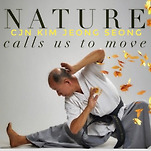
<p style="text-align: justify;">📌 Subject:<br><b>On Frank’s Question Regarding Treatment-Kimu and Vipassana-Acupuncture — A Deeper Reflection on the Essence of Jinyoung Ssangkum Ryu Practice</b></p><hr data-ke-style="style1"><p style="text-align: justify;"> </p><div class="figure-img" data-ke-type="image" data-ke-style="alignCenter" data-ke-mobilestyle="widthOrigin"><img src="https://t1.daumcdn.net/cafeattach/1XBdW/3f287eca775743683dd451ff2055c7a96a58c354" class="txc-image" data-img-src="https://t1.daumcdn.net/cafeattach/1XBdW/3f287eca775743683dd451ff2055c7a96a58c354" data-origin-width="1024" data-origin-height="1536"></div><p style="text-align: left;"><br>🌱 Opening Reflection<br> <br>Many people around the world are showing growing interest in the practice of <b>Jinyoung Ssangkum Ryu</b>, and the number of dedicated practitioners continues to rise.<br>However, the true essence of this system — which is also the essence of all genuine martial arts — lies far beyond physical technique.<br>It is a path toward realizing <b>the laws of nature, universal truth, and harmony</b> — a training system that seeks to integrate both <b>the visible</b> (external physical discipline) and <b>the invisible</b> (internal cultivation of mind and energy).<br>Yet, the invisible cannot be taught without a question.<br>And such a question must arise from personal experience.<br>Only through each practitioner’s own journey do meaningful questions surface, and the answers to those questions must be tailored to each person’s nature, experience, and level of awareness.<br> <br>In this context, <b>Frank’s recent question cannot be addressed with a single answer.</b><br>Continuous progress in martial arts — and in life — comes through a living dialogue of inquiry and response.<br>It is in this rhythm that true understanding unfolds.<br>As teachers, we cannot walk the path for our students.<br>We are simply <b>guides who point out the way</b>.<br>While physical techniques may be transmitted to a certain degree by the teacher, the <b>inner journey</b> — the dimension of spirit, awareness, and awakening — must be walked by the practitioner alone.<br>This can only be truly grasped when one awakens to what I call <b>the love of nature</b> — a direct realization that illuminates both the purpose and the direction of the practice.<br>Perhaps this also offers a glimpse into why <b>Jinyoung Ssangkum Ryu</b> has emerged in this century — as a complete and integrated system that unites physical practice with inner realization in a way not seen before.<br>It is my sincere hope that questions like the one below will continue to emerge, and that we may share and explore them together — not only between teacher and student, but among sincere practitioners around the world.</p><hr data-ke-style="style1"><p style="text-align: justify;"> <br>🍃 On the Foundation of Shinchim Suhaeng<br> <br><b>Shinchim Suhaeng must always be rooted in the standpoint of Nature — not in one’s personal will.</b><br>This alignment with the order of Nature must remain the central foundation throughout every stage of practice.<br>Only when ego-driven intention is relinquished and the body begins to move in harmony with the natural rhythm of energy can the true essence of Shinchim Suhaeng be revealed.<br>It is not about directing or manipulating energy — but about <b>listening</b>, <b>following</b>, and ultimately <b>becoming one</b> with it.<br>This is why the practice must not be approached with force or expectation, but with deep awareness, humility, and trust in the universal principles that govern all life.</p><hr data-ke-style="style1"><p style="text-align: justify;"> <br> <br>💬 Now, to your questions:<br> <br>Dear Frank,<br>That is a very thoughtful question, and your interpretation is understandable when looking at the terms alone. While Chiryo Ki-Mu may appear to be a broader category and Shinchim a technique within it, the deeper truth is more subtle and interconnected.<br>Both <b>Chiryo Ki-Mu</b> and <b>Shinchim Suhaeng (Vipassana-Acupuncture)</b> arise from the same essential root — the natural and spontaneous movement of Ki (energy) from within.<br> <br>🔹 <b>Chiryo Ki-Mu</b> is not a healing method in the conventional sense, but rather a <b>byproduct of proper Ki-Mu training</b>.<br>Through sincere practice, one becomes aware of the flow of energy — its blockages, openings, and relation to physical or emotional imbalances.<br>The restoration of energetic harmony is what we call healing, but it is not the goal; it is an <b>incidental outcome of right practice</b> in alignment with nature.<br> <br>🔹 <b>Shinchim Suhaeng</b>, meanwhile, incorporates the use of acupuncture needles. But it cannot be practiced effectively unless the practitioner has first internalized the principles of Ki-Mu — where the body no longer moves by will, but in accord with the universal flow.<br><br>This is why we refer to it as Vipassana-Acupuncture.<br>Once one understands the deeper meaning of Vipassana — insight born of silent, non-judgmental observation — it becomes clear that Shinchim is not merely a technique, but a form of practice that functions as a miniature of the universe — a path through which one experiences universal principles directly through the body.<br><br>The true aim of <b>Shinchim Suhaeng</b> is not just treatment, but <b>conscious transformation</b>.<br><br>As awareness deepens, a natural innovation of being takes place — reflected in one’s thoughts, words, and actions in daily life.<br><br>And just like in Chiryo Ki-Mu, healing arises naturally — not as the destination, but as a companion on the path.<br>In essence, <b>Shinchim Suhaeng cannot be practiced correctly without a foundational awakening through Chiryo Ki-Mu</b>.<br><br>This is why I always emphasize that Ki-Mu training must come first — it opens the gateway.<br><br>It is my hope that more practitioners will come to embody this through their own sincere experience.</p><hr data-ke-style="style1"><p style="text-align: justify;"> <br> <br>🪷 Final Words<br>Perhaps now, you may better understand why I often say:</p><blockquote><p>Although it may appear that I am healing others, I am not a healer.<br>Although it seems I adjust bones, I am not a chiropractor.<br>Even though I use needles, I am not an acupuncturist.<br>Though I sometimes write poems, I am not a poet.<br>And even though I practice breathwork and meditation, I do not call myself a meditator.</p></blockquote><p style="text-align: justify;"> <br><b>The reason is simple</b>:<br>What truly matters is not the label or the technique,<br>but the awareness of the essence behind the action —<br>the natural flow of Ki that arises when we surrender effort and align with universal law.<br>In that state, our actions may manifest as healing, poetry, or meditation —<br><b>not because we intend it</b>, but <b>because we are in harmony</b>.<br> <br>-------<br>August 1, 2025<br>Warm regards,<br><b>JSK</b><br> <br> </p><div class="figure-img" data-ke-type="image" data-ke-style="alignCenter" data-ke-mobilestyle="widthOrigin"><img src="https://t1.daumcdn.net/cafeattach/1XBdW/24b74deb44dfc1af4e97e839670a96afb7293e8f" class="txc-image" data-img-src="https://t1.daumcdn.net/cafeattach/1XBdW/24b74deb44dfc1af4e97e839670a96afb7293e8f" data-origin-width="1079" data-origin-height="666"></div><div class="figure-img" data-ke-type="image" data-ke-style="alignCenter" data-ke-mobilestyle="widthOrigin"><img src="https://t1.daumcdn.net/cafeattach/1XBdW/8d1801c79f94008591eb78f038d60da9af67683a" class="txc-image" data-img-src="https://t1.daumcdn.net/cafeattach/1XBdW/8d1801c79f94008591eb78f038d60da9af67683a" data-origin-width="911" data-origin-height="915"></div><div class="figure-img" data-ke-type="image" data-ke-style="alignCenter" data-ke-mobilestyle="widthOrigin"><img src="https://t1.daumcdn.net/cafeattach/1XBdW/e22f26036601ed41536bec463523f53b55e96326" class="txc-image" data-img-src="https://t1.daumcdn.net/cafeattach/1XBdW/e22f26036601ed41536bec463523f53b55e96326" data-origin-width="959" data-origin-height="970"></div><div class="figure-img" data-ke-type="image" data-ke-style="alignCenter" data-ke-mobilestyle="widthOrigin"><img src="https://t1.daumcdn.net/cafeattach/1XBdW/95c5dc5bd99383977f3e1133c6b1953123050865" class="txc-image" data-img-src="https://t1.daumcdn.net/cafeattach/1XBdW/95c5dc5bd99383977f3e1133c6b1953123050865" data-origin-width="912" data-origin-height="912"></div><div class="figure-img" data-ke-type="image" data-ke-style="alignCenter" data-ke-mobilestyle="widthOrigin"><img src="https://t1.daumcdn.net/cafeattach/1XBdW/3b597d9cdf63227d642f488f1b770f65f9b140c2" class="txc-image" data-img-src="https://t1.daumcdn.net/cafeattach/1XBdW/3b597d9cdf63227d642f488f1b770f65f9b140c2" data-origin-width="1024" data-origin-height="1024"></div><div class="figure-img" data-ke-type="image" data-ke-style="alignCenter" data-ke-mobilestyle="widthOrigin"><img src="https://t1.daumcdn.net/cafeattach/1XBdW/97df1141663c8b4aad75f446d86559aae783221a" class="txc-image" data-img-src="https://t1.daumcdn.net/cafeattach/1XBdW/97df1141663c8b4aad75f446d86559aae783221a" data-origin-width="1079" data-origin-height="1620"></div><div class="figure-img" data-ke-type="image" data-ke-style="alignCenter" data-ke-mobilestyle="widthOrigin"><img src="https://t1.daumcdn.net/cafeattach/1XBdW/72fc4fca5ceab254a055f71dd70382475ebd515c" class="txc-image" data-img-src="https://t1.daumcdn.net/cafeattach/1XBdW/72fc4fca5ceab254a055f71dd70382475ebd515c" data-origin-width="1535" data-origin-height="2048"></div><div class="figure-img" data-ke-type="image" data-ke-style="alignCenter" data-ke-mobilestyle="widthOrigin"><img src="https://t1.daumcdn.net/cafeattach/1XBdW/cc448387afa0e1f1a2e2b1ec20aae1c0357eb0b4" class="txc-image" data-img-src="https://t1.daumcdn.net/cafeattach/1XBdW/cc448387afa0e1f1a2e2b1ec20aae1c0357eb0b4" data-origin-width="2048" data-origin-height="2048"></div><div class="figure-img" data-ke-type="image" data-ke-style="alignCenter" data-ke-mobilestyle="widthOrigin"><img src="https://t1.daumcdn.net/cafeattach/1XBdW/8de8bcb777b7dda3eaf2fb3e504c5a2b35082a81" class="txc-image" data-img-src="https://t1.daumcdn.net/cafeattach/1XBdW/8de8bcb777b7dda3eaf2fb3e504c5a2b35082a81" data-origin-width="1080" data-origin-height="1086"></div><div class="figure-img" data-ke-type="image" data-ke-style="alignCenter" data-ke-mobilestyle="widthOrigin"><img src="https://t1.daumcdn.net/cafeattach/1XBdW/dff249243da0c6aeaae01f27e8d24549dc73c88c" class="txc-image" data-img-src="https://t1.daumcdn.net/cafeattach/1XBdW/dff249243da0c6aeaae01f27e8d24549dc73c88c" data-origin-width="1200" data-origin-height="1600"></div><div class="figure-img" data-ke-type="image" data-ke-style="alignCenter" data-ke-mobilestyle="widthOrigin"><img src="https://t1.daumcdn.net/cafeattach/1XBdW/a96eb0413ae1b03fefd14f03424155664f0d00f2" class="txc-image" data-img-src="https://t1.daumcdn.net/cafeattach/1XBdW/a96eb0413ae1b03fefd14f03424155664f0d00f2" data-origin-width="1200" data-origin-height="1600"></div><div class="figure-img" data-ke-type="image" data-ke-style="alignCenter" data-ke-mobilestyle="widthOrigin"><img src="https://t1.daumcdn.net/cafeattach/1XBdW/c93fd57c91ea40649fd3bd5d420aac5a4f3a297d" class="txc-image" data-img-src="https://t1.daumcdn.net/cafeattach/1XBdW/c93fd57c91ea40649fd3bd5d420aac5a4f3a297d" data-origin-width="1200" data-origin-height="1600"></div><div class="figure-img" data-ke-type="image" data-ke-style="alignCenter" data-ke-mobilestyle="widthOrigin"><img src="https://t1.daumcdn.net/cafeattach/1XBdW/9d3c718751bc972ab34b779ab7a63c0a05de93ca" class="txc-image" data-img-src="https://t1.daumcdn.net/cafeattach/1XBdW/9d3c718751bc972ab34b779ab7a63c0a05de93ca" data-origin-width="4000" data-origin-height="2252"></div><div class="figure-img" data-ke-type="image" data-ke-style="alignCenter" data-ke-mobilestyle="widthOrigin"><img src="https://t1.daumcdn.net/cafeattach/1XBdW/0e655061c09972834d0403aeb67986b544be7b59" class="txc-image" data-img-src="https://t1.daumcdn.net/cafeattach/1XBdW/0e655061c09972834d0403aeb67986b544be7b59" data-origin-width="2000" data-origin-height="1126"></div><div class="figure-img" data-ke-type="image" data-ke-style="alignCenter" data-ke-mobilestyle="widthOrigin"><img src="https://t1.daumcdn.net/cafeattach/1XBdW/82efe72594c3ce2b882c572a4bcf8e25455ce9a1" class="txc-image" data-img-src="https://t1.daumcdn.net/cafeattach/1XBdW/82efe72594c3ce2b882c572a4bcf8e25455ce9a1" data-origin-width="2000" data-origin-height="1126"></div><p style="text-align: left;"><br> </p>
<!-- -->