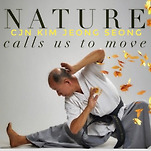
<p style="text-align: left;">In Korean<br><a href="https://m.cafe.daum.net/enlightenment-k/dcM5/491?svc=cafeap" target="_blank" class="ke-link">https://m.cafe.daum.net/enlightenment-k/dcM5/491?svc=cafeap</a></p><div class="figure-open" contenteditable="false" data-ke-type="opengraph" data-ke-align="alignCenter" data-og-type="website" data-og-title="아날로그와 디지털의 개념을 통한 무술 수행의 궁극적 목표에 대한 고찰과 이해" data-og-description="《아날로그와 디지털의 개념을 통한 무술 수행의 궁극적 목표에 대한 고찰과 이해》서론본 글은 아날로그와 디지털의 개념을 통해 무술 수행을 고찰하고, 그 본질을 또 다른 방향으로 새롭게 " data-og-host="m.cafe.daum.net" data-og-source-url="https://m.cafe.daum.net/enlightenment-k/dcM5/491?svc=cafeap" data-og-url="https://m.cafe.daum.net/enlightenment-k/dcM5/491?svc=cafeap" data-og-image="http://scrap.kakaocdn.net/dn/b1JfBb/bl4PLlcWNHb/6nEFRXUMPlLkmC6cTnlxc1/kakaolink40_original.jpg?width=1024&height=513"><a href="https://m.cafe.daum.net/enlightenment-k/dcM5/491?svc=cafeap" target="_blank" data-source-url="https://m.cafe.daum.net/enlightenment-k/dcM5/491?svc=cafeap"><div class="og-image"><img class="thumb_img" src="http://scrap.kakaocdn.net/dn/b1JfBb/bl4PLlcWNHb/6nEFRXUMPlLkmC6cTnlxc1/kakaolink40_original.jpg?width=1024&height=513" alt="" xxxxonerror="this.src="//img1.kakaocdn.net/thumb/C200x200/?fname=https%3A%2F%2Ft1.daumcdn.net%2Fcafe_image%2Fcafe_meta_image_190529.png""></div><div class="og-text"><p class="og-title">아날로그와 디지털의 개념을 통한 무술 수행의 궁극적 목표에 대한 고찰과 이해</p><p class="og-desc">《아날로그와 디지털의 개념을 통한 무술 수행의 궁극적 목표에 대한 고찰과 이해》서론본 글은 아날로그와 디지털의 개념을 통해 무술 수행을 고찰하고, 그 본질을 또 다른 방향으로 새롭게 </p><p class="og-host">m.cafe.daum.net</p></div></a></div><p style="text-align: left;"><br><br>■ Subject: Reflection and Understanding of the Ultimate Goal of Martial Arts Training through the Concepts of Analog and Digital<br><br>Introduction<br><br>This essay seeks to explore martial arts training through the lens of analog and digital concepts, offering a new way to understand its essence.<br><br>It was inspired by a recent question-and-answer exchange with an American Haedong Kumdo instructor in MN, USA 🇺🇸.<br><br>The core of martial arts—what we may call Energy Flow—must be practiced from the very beginning. It cannot be grasped merely by reading books or memorizing theories. <br><br>It truly begins only when experienced directly through the body. <br><br>That experience, in turn, calls us back to the basics, to endless repetition, where we come to realize again and again that the fundamental principles of human life and the universe reside here. <br><br>Over time, this repetition deepens our awareness. That is the beginning of a change in consciousness.<br><br>Therefore, martial arts training must go beyond physical cultivation. It should lead us to an integrated understanding of human existence and the laws of nature, guiding us to live better lives while achieving spiritual maturity until the very end.<br><br>That is the ultimate goal of life.<br><br>---<br><br>1. The Duty of a Teacher<br><br>A general practitioner, as an amateur, may simply enjoy the parts they prefer. But a teacher is different. To know both the beginning and the end is an essential virtue of a teacher, and through this they must guide students on the right path. This is not mere transmission of knowledge—it is the teacher’s moral duty and responsibility.<br><br>---<br><br>2. The Integration of Technique, Philosophy, and Healing<br><br>True martial arts training is completed only when Technique , Philosophy, and Healing are tightly interwoven. <br><br>These three are inseparable. Without this awareness, training remains nothing more than physical repetition, never reaching the true essence of martial arts.<br><br>Especially when the human body-machine begins to age and natural movement can no longer be sustained, the time for true realization may already be too late.<br><br>---<br><br>3. Awakening in Health<br><br>The essential realization of martial arts arises when the body is healthy and the mind is clear. Such insight is not granted by age, experience, or even exceptional skill. It comes only through correct practice, self-reflection, and direct experience.<br><br>---<br><br>4. The Limit of Training Without Beginning or End<br><br>If one immerses in training without understanding its beginning and end, the moment the body reaches its physical limits, one inevitably feels emptiness, impermanence, even resentment or complaint. Thus, practitioners must prepare in advance to cultivate their consciousness.<br><br>Martial arts are built upon the unseen, which then manifests as the visible. The harmony and balance of these two is what we call enlightenment. Without this realization, physical training ends merely as “momentary satisfaction.”<br><br>Momentary satisfaction is, of course, necessary in human community life. Through tournaments, promotion tests, and other events, one can demonstrate skill, strengthen bonds, and enjoy the joy of community. That is momentary satisfaction.<br><br>But the embodiment of martial arts is something one carries eternally. No one can take you there. Only through personal effort and realization can it be found. A teacher is merely a guide. And if my teacher cannot show me the way from beginning to end, then I must remember the truth—that I must find it myself. This helps me avoid wasting time on distractions or emptiness.<br><br>Thus, martial training is a personal journey, discovered at one’s own level and in one’s own way. To believe that participation in organizational events, whether large or small, automatically sets you on the right path is a misunderstanding.<br><br>---<br><br>5. Observation from a Global Perspective<br><br>This coming October, a seminar will be held in Ohio, USA. Compared to many countries, the U.S. has a large number of Haedong Kumdo practitioners and senior ranks, many of whom demonstrate high skill in sword techniques, cutting, and sword dance.<br><br>And yet, despite this passion, how many practitioners can truly confirm‎ whether their movements align with the principles of the human body? How many can check and explain those principles for themselves, or even know clearly where they stand in the stages of their own training?<br><br>I often ask whether one truly understands the natural way of straight cutting with energy flow—the correct and natural path of the sword in a straight cut. The reason I ask is because this principle has not been properly taught or practiced from the very beginning until now.<br><br>It is my hope that this seminar will serve as an opportunity for each practitioner to re-examine their training and reflect deeply on the roots of martial arts.<br><br>For reference, I encourage you to review my writing on the Nine Stages of Martial Arts Training:<br><br>○Part 1 – Principle of Muwi & Step-by-Step Training and Self-Reflection<br><br>○Part 2 – The Principle of Muwi (無爲), Stages of Training & Self-Reflection<br><br>---<br><br>6. The Core of Energy Flow<br><br>The recognition of the connection between Technique, Philosophy, and Healing begins at the moment one directly experiences energy flow through the body.<br><br>Here, understanding and embodiment are different. Correct movements must be trained repeatedly. Only when one becomes a “Kimu body” does transformation begin to appear in one’s life.<br><br>As training deepens in alignment with the laws of nature, human speech, thought, and action naturally adapt and harmonize with nature. This leads not only to mastery of physical skills but to profound shifts in attitude and consciousness. Along that rightful path, health and happiness arise as natural by-products.<br><br>---<br><br>7. The Philosophical Interpretation of Analog and Digital<br><br>(1) The Human Body is Analog<br>Analog means continuity and organic flow. The human body exists in an unbroken process—breathing, pulse, temperature, sensation, tension and relaxation of muscles. These are signs of life itself and proof of our synchronization with the rhythms of nature.<br><br>(2) Training and Analysis are Digital<br>Digital refers to dividing information into parts and processing it step by step. In martial training, the breakdown of movements, precise checking of speed, direction, and force—all of these are digital approaches. They analyze and reconstruct the analog flow.<br><br>(3) The Integration of Analog and Digital<br><br>If there is only analog, one has richness of feeling but lacks precision. If only digital, there is precision but no vitality or flexibility.<br><br>Kimu training unites both worlds. It sustains the analog flow of Ki (氣) while integrating the digital precision of analysis. <br><br>Through this, the practitioner reaches the state of “doing without doing” (Muwi)—perfect movements that appear effortless.<br><br>---<br><br>8. Application to Training and Healing<br><br>Training: Follow the natural flow of Ki like analog, while observing, analyzing, and adjusting like digital.<br><br>Healing: Receive bodily sensations as analog, while locating the precise point of healing like digital.<br><br>In this interplay between continuity and segmentation, deeper awareness and resilience are cultivated.<br><br>---<br><br>Conclusion<br><br>Analog and digital are the two pillars of martial arts training.<br><br>Analog represents the flow of nature and the foundation of the human body.<br><br>Digital refines this foundation, shaping it into skills and strengths that can be expressed in reality.<br><br>Jinyoung Ssangkum Ryu Kimu training integrates these two flows to bring body and mind into complete harmony. It goes beyond technical innovation to cultivate maturity of consciousness, making life healthier and happier.<br><br>Thus, the ultimate goal of martial training is not merely the sharpening of technique, but the holistic maturity of human beings through the union of analog and digital.<br><br><br>---<br><br>📅 August 16, 2025, Saturday<br>Founder of Jinyoung Ssangkum Ryu Haedong Kumdo<br>Jeong Seong, Kim<br><br></p><div class="figure-img" data-ke-type="image" data-ke-style="alignCenter" data-ke-mobilestyle="widthOrigin"><img src="https://t1.daumcdn.net/cafeattach/1XBdW/0f368ab55222db05b2a0ad066d8edf86c97dc767" class="txc-image" data-img-src="https://t1.daumcdn.net/cafeattach/1XBdW/0f368ab55222db05b2a0ad066d8edf86c97dc767" data-origin-width="1024" data-origin-height="1024"></div><p style="text-align: left;"><br></p><div class="figure-img" data-ke-type="image" data-ke-style="alignCenter" data-ke-mobilestyle="widthOrigin"><img src="https://t1.daumcdn.net/cafeattach/1XBdW/41bb5710871ae9b841ccb24ffc340e196d1a2644" class="txc-image" data-img-src="https://t1.daumcdn.net/cafeattach/1XBdW/41bb5710871ae9b841ccb24ffc340e196d1a2644" data-origin-width="828" data-origin-height="694"></div><div class="figure-img" data-ke-type="image" data-ke-style="alignCenter" data-ke-mobilestyle="widthOrigin"><img src="https://t1.daumcdn.net/cafeattach/1XBdW/5d8d351a83feaddd882414857d1dc68fc973302e" class="txc-image" data-img-src="https://t1.daumcdn.net/cafeattach/1XBdW/5d8d351a83feaddd882414857d1dc68fc973302e" data-origin-width="1012" data-origin-height="1006"></div><div class="figure-img" data-ke-type="image" data-ke-style="alignCenter" data-ke-mobilestyle="widthOrigin"><img src="https://t1.daumcdn.net/cafeattach/1XBdW/6102674c24e9cb234760a846ef7b5691be68c559" class="txc-image" data-img-src="https://t1.daumcdn.net/cafeattach/1XBdW/6102674c24e9cb234760a846ef7b5691be68c559" data-origin-width="1006" data-origin-height="341"></div><div class="figure-img" data-ke-type="image" data-ke-style="alignCenter" data-ke-mobilestyle="widthOrigin"><img src="https://t1.daumcdn.net/cafeattach/1XBdW/84dd6173c670402947110fd36e39a562d0e87882" class="txc-image" data-img-src="https://t1.daumcdn.net/cafeattach/1XBdW/84dd6173c670402947110fd36e39a562d0e87882" data-origin-width="414" data-origin-height="623"></div><p style="text-align: left;"><br></p>
<!-- -->