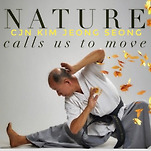
<p style="text-align: left;">In Korean<br><a href="https://m.cafe.daum.net/enlightenment-k/dcM5/578?svc=cafeapp" target="_blank" class="ke-link">https://m.cafe.daum.net/enlightenment-k/dcM5/578?svc=cafeapp</a></p><div class="figure-open" contenteditable="false" data-ke-type="opengraph" data-ke-align="alignCenter" data-og-type="website" data-og-title="진영쌍검류의 핵심과 자연의 이치 정리" data-og-description="■ 새해에 다루고자 하는 주제1.동이(東夷) 무예 원류인 기무(氣武)와 진영쌍검류 해동검도의 지구촌 전수2.사라진 몸의 언어와 무(武)의 변질3.진영쌍검류의 핵심과 자연의 이치 정리4.기무수련" data-og-host="m.cafe.daum.net" data-og-source-url="https://m.cafe.daum.net/enlightenment-k/dcM5/578?svc=cafeapp" data-og-url="https://m.cafe.daum.net/enlightenment-k/dcM5/578?svc=cafeapp" data-og-image="http://scrap.kakaocdn.net/dn/JrmAH/dJMb8XkaDpX/U8DQ1ZPuEHiHQZEQn6YCok/kakaolink40_original.png?width=1024&height=1024"><a href="https://m.cafe.daum.net/enlightenment-k/dcM5/578?svc=cafeapp" target="_blank" data-source-url="https://m.cafe.daum.net/enlightenment-k/dcM5/578?svc=cafeapp"><div class="og-image"><img class="thumb_img" src="http://scrap.kakaocdn.net/dn/JrmAH/dJMb8XkaDpX/U8DQ1ZPuEHiHQZEQn6YCok/kakaolink40_original.png?width=1024&height=1024" alt="" xxxxonerror="this.src="//img1.kakaocdn.net/thumb/C200x200/?fname=https%3A%2F%2Ft1.daumcdn.net%2Fcafe_image%2Fcafe_meta_image_190529.png""></div><div class="og-text"><p class="og-title">진영쌍검류의 핵심과 자연의 이치 정리</p><p class="og-desc">■ 새해에 다루고자 하는 주제1.동이(東夷) 무예 원류인 기무(氣武)와 진영쌍검류 해동검도의 지구촌 전수2.사라진 몸의 언어와 무(武)의 변질3.진영쌍검류의 핵심과 자연의 이치 정리4.기무수련</p><p class="og-host">m.cafe.daum.net</p></div></a></div><p style="text-align: left;">- English and Spanish Translations -</p><div class="figure-img" data-ke-type="image" data-ke-style="alignCenter" data-ke-mobilestyle="widthOrigin"><img src="https://t1.daumcdn.net/cafeattach/1XBdW/185cd52138752f2f06b2d9e6f42584e02ca11acb" class="txc-image" data-img-src="https://t1.daumcdn.net/cafeattach/1XBdW/185cd52138752f2f06b2d9e6f42584e02ca11acb" data-origin-width="756" data-origin-height="1035"></div><p style="text-align: left;">■ Topics to be addressed in the coming year<br><br>1. Kimu (氣武), the martial root of Dongyi traditions, and the global transmission of Jinyoung Ssangkum Ryu Haedong Kumdo<br><br>2. The lost language of the body and the distortion of “Mu” (martial practice)<br><br><span style="color: #EE2323;">3. Core Explanation of Jinyoung Ssangkum Ryu Based on the Principles of Nature<br></span><br>4. The purpose of Kimu training and its distinctions from other martial arts<br>(such as Taijiquan and Qigong, etc.)<br><br>5. The foundational philosophy of Kimu in Jinyoung Ssangkum Ryu<br><br>6. Those who convey the love of nature until the very end— Practitioners of Jinyoung Ssangkum Ryu<br><br><span style="color: #EE2323;">among them above, <br>this article is no.3</span><br> <br>🇺🇸 English Version<br><br>■ <span style="color: #006DD7;">Core Explanation of Jinyoung Ssangkum Ryu Based on the Principles of Nature<br>— Training That Begins with Understanding and Is Completed Through the Body</span><br><br><br>Throughout human history, countless people have explained training and cultivation under the name of discipline in ways that are excessively philosophical, religious, mystical, or overly symbolic.<br><br>As a result, reaching the actual core of training has never been easy.<br>Jinyoung Ssangkum Ryu seeks to move away from such approaches and explain the fundamental essence of training within the boundaries of common sense, using language that is practical and widely used in modern society.<br><br>The reason for repeatedly emphasizing this point is that it is directly connected to the ultimate purpose of martial arts and human life, and because it helps reduce the unnecessary waste of time, energy, and physical, mental, and economic resources during one’s lifetime.<br><br>Many who read this may say, “I already know this,” or “I understand this well.”<br><br>However, when one observes closely, it becomes clear that the majority do not truly know, yet mistakenly believe that they do.<br><br>The core of martial arts—its very starting point—is energy flow.<br>Only when this flow is truly embodied in the body can a correct beginning occur.<br><br>This is not a matter of “knowing a little.”<br>It is a matter of knowing or not knowing—there is no in-between.<br>What is often called “partial understanding” is, in most cases, an illusion.<br><br>This text does not claim absolute truth.<br>It presents a perspective shaped by personal experience.<br>Readers are invited to reflect through their own standards and form their own realization.<br><br><span style="color: #006DD7;">1. What Does Jinyoung Ssangkum Ryu Seek to Explain?<br>— Not the Accumulation of Technique, but the Restoration of Order</span><br><br><br>The essence of training in Jinyoung Ssangkum Ryu does not lie in learning more techniques or adding new elements.<br><br>It lies in recognizing and restoring, through the body, the order that has always existed between human beings and nature.<br><br>“Restoration of order” means returning the constantly changing state of the body and mind to its original condition.<br><br>In other words, it is the continual act of resetting one’s internal reference point of the mind to zero. (Continuously re-centering the mind to zero)<br><br>It can also be understood through the principle of a water supply system:<br>by reducing internal pressure within the body to a zero state,<br>the constantly fluctuating flow of bodily energy is allowed to return to its original condition,<br>just as water flows naturally when pressure is equalized.<br><br>For this reason, this training does not aim at rapid acquisition or flashy techniques.<br><br>Rather, it is a process of gradually letting go of excessive force, unnecessary intention, and distorted perception.<br>This is the practical and realistic meaning behind the commonly used expressions<br>“emptying,” “forgetting,” and “discarding.”<br><br>It does not mean that something becomes empty simply because one intends to empty it.<br><br>At this point, Jinyoung Ssangkum Ryu asks a different question from conventional martial arts that emphasize speed, strength, and flexibility:<br>“If one is out of alignment with the natural flow—<br>if the process of restoration is neglected or insufficient—<br>what can even the most precise technique truly provide?”<br><br>It asks us to consider that the more we move away from natural flow,<br>the more effort and struggle we create for ourselves—<br>often leading to pain, illness, and even a shorter life.<br><br><span style="color: #006DD7;">2. Training Through Natural Principles Centers on Internal Standards, Not External Knowledge</span><br><br><br>The principles of nature are not abstract concepts existing somewhere outside of us.<br><br>The cycles of the sun, the changing seasons, the alternation of day and night, and the rhythms of tension and relaxation, contraction and expansion are already operating within the human body.<br><br>Jinyoung Ssangkum Ryu speaks of nature not to explain it intellectually, but to allow practitioners to experience it repeatedly and return to their original state.<br><br>This is training for recovery, and it is the foundation of sustained health and happiness.<br><br>Nature always moves in the same way. The problem is not that nature has changed, but that humans have gradually drifted away from its rhythm.<br><br>Training and cultivation are necessary not because nature has changed, but because humans have forgotten how to follow it.<br><br>This is why "Follow the Energy" is used as a central seminar theme.<br><br><span style="color: #006DD7;">3. The Order of the Heavens and the Structure of the Human Body Are Not Separate<br>— As Above, So Below</span><br><br><br>Ancient civilizations looked to the heavens not because they were mystical, but because they embodied stable and unchanging order.<br>When the center remains stable, the surrounding movements naturally fall into harmony.<br>This principle applies equally to celestial systems and to the human body.<br>When the body’s center collapses, the limbs become overly tense, breathing becomes shallow, and awareness is constantly pulled outward, away from the core.<br>As a result, the body becomes vulnerable to pain, illness, and reduced metabolic function.<br>Jinyoung Ssangkum Ryu addresses this restoration of center not as a concept, but as a practical action.<br>This practice is Kimu training.<br><br><span style="color: #006DD7;">4. The Essence of Movement in Jinyoung Ssangkum Ryu<br>— Participating in Flow, Not Imitating Form</span><br><br><br>The movements of Jinyoung Ssangkum Ryu are not meant to precisely reproduce fixed shapes.<br><br>Each movement functions as a means of placing the body within the natural flow.<br>There are many swords forms in Jinyoung Ssangkum Ryu training, among them, <br>"Simhyung" (sim- heart, hyung- form)with double sword is not about controlling the mind, but about reducing the mind’s interference.<br>"Sunghyung"(sung-star, hyung-form) is not symbolic of constellations; it is a method for embedding orderly movement and directional awareness into the body, cultivating cosmic awareness.<br><br>Understanding follows later.<br>The body changes first.<br><br><span style="color: #006DD7;">5. Kimu Training and the Principles of Nature<br>— Restoration, Not Manipulation</span><br><br><br>Natural principles do not appear because one believes in them, nor do they disappear because one denies them.<br>They reveal themselves when recognized; otherwise, they simply pass unnoticed.<br><br>Kimu training does not manipulate the body through conscious control or forceful intention.<br><br>Instead, it allows the order already operating within the body and nature to emerge as awareness steps back.<br><br>Training is not about creating something new.<br><span style="color: #EE2323;">It is about restoring what was always there.<br></span><br><span style="color: #006DD7;">6. Technique, Philosophy, and Healing Are Inseparable</span><br><br><br>○ <span style="color: #EE2323;">Technique</span> is the expression‎ of natural order through movement.<br><br>○ <span style="color: #EE2323;">Philosophy</span> is the language that organizes and understands that order.<br><br>○ <span style="color: #EE2323;">Healing</span> is the process of restoring order when it has been disturbed.<br>They are not separate domains, but different expressions of the same principle.<br><br><span style="color: #006DD7;">7. The Tools of Training<br>— Refining Sensitivity Through Awareness</span><br><br><br>The main purpose of Kimu training does not generate energy.<br>It restores the ability to perceive the flow of energy.<br>Through repeated experience, the practitioner distinguishes between blockage and openness, convergence and expansion.<br>From this arises sensitivity to flow and direction—practical tools for both training and healing.<br><br><br><span style="color: #006DD7;">8. The Position of Jinyoung Ssangkum Ryu in Relation to Dongyi Martial Arts</span><br><br><br>Jinyoung Ssangkum Ryu does not claim to inherit a specific tradition.<br>It simply confirm‎s that its results align with the bodily principles pursued by ancient Dongyi martial arts.<br>The only criterion is whether it actually works in the human body today.<br><br><span style="color: #006DD7;">9. Questions for the Practitioner</span><br><br>After sufficiently training physical techniques such as forms, cutting, sparring, and sword dance, <br><br>one must ask:<br>○ What should be trained next?<br><br>Martial arts include both visible and invisible training.<br><br>○ Am I focused only on ranks and promotions through competitions and examinations?<br><br>○ Am I merely enjoying belonging to a large group, engaging in mutual praise and reassurance?<br><br>○ Am I truly walking the correct martial path and training properly?<br><br>While traveling internationally for seminars almost every month, it is common to encounter instructors—even those with decades of experience—who still lack a proper understanding and expression‎ of basic Haedong Kumdo postures like Jayeonsae(자연세), Sodosae(소도세), Dadosae(대도세), Jocheonsae(조천세), Beomsae(범세), etc.,<u><span style="color: #006DD7;">even I could also find incorrect parts in basic postures of explanations for their publication issued by their association.</span></u><br><br>More concerning is that many are unaware of their own deficiencies, yet actively promote organizations and recruit students.<br><br>This text is not written to criticize others, but to encourage honest self-reflection.<br><br><span style="color: #EE2323;">Martial arts are not about surpassing others, but about continually verifying one’s own position.</span><br><br><br>10. Conclusion<br><br><br>Jinyoung Ssangkum Ryu speaks of nature for a clear reason:<br>to prevent martial arts from becoming separated from human life.<br><br>Its aim is to move beyond technique and reconnect with philosophy and restoration.<br><br>The starting point is not special knowledge, but common sense—natural principles that were once known, then forgotten.<br><br>To live that common sense again through the body—<br>that is the essence of Jinyoung Ssangkum Ryu.<br><br>--‐------<br>February 3, 2026<br>Jeong Seong Kim<br>Founder of Jinyoung Ssangkum Ryu Haedong Kumdo<br><br><br>🇪🇸 Versión en Español<br><br>Explicación esencial de Jinyoung Ssangkum Ryu basada en los principios de la naturaleza<br>— Un entrenamiento que comienza con la comprensión y se completa a través del cuerpo<br>A lo largo de la historia humana, innumerables personas han explicado el entrenamiento y la práctica bajo el nombre de disciplina de forma excesivamente filosófica, religiosa, mística o simbólica.<br><br>Como resultado, alcanzar el núcleo real del entrenamiento nunca ha sido fácil.<br><br>Jinyoung Ssangkum Ryu se aparta de estos enfoques y busca explicar la esencia fundamental del entrenamiento dentro del sentido común, utilizando un lenguaje práctico y propio de la sociedad moderna.<br><br>Esta insistencia se debe a que está directamente relacionada con el propósito último de las artes marciales y de la vida humana, y porque permite reducir el desperdicio innecesario de tiempo, energía y recursos físicos, mentales y económicos.<br><br>Muchos dirán: “Ya lo sé” o “Ya lo entiendo”.<br>Sin embargo, al observar con atención, se hace evidente que la mayoría no lo sabe realmente, aunque crea que sí.<br><br>El núcleo de las artes marciales—su punto de partida—es el flujo de energía.<br>Solo cuando este flujo está verdaderamente encarnado en el cuerpo puede existir un comienzo correcto.<br>No se trata de saber “un poco”.<br>Se sabe o no se sabe.<br>La comprensión parcial suele ser una ilusión.<br>Este texto no pretende imponer una verdad absoluta.<br>Es una perspectiva basada en la experiencia.<br>Después de leerlo, cada persona debe reflexionar desde su propio criterio y generar su propia comprensión.<br><br>1. ¿Qué busca explicar Jinyoung Ssangkum Ryu?<br>— No la acumulación de técnica, sino la restauración del orden<br>La esencia del entrenamiento en Jinyoung Ssangkum Ryu no consiste en añadir más técnicas.<br>Consiste en reconocer y restaurar, a través del cuerpo, el orden que siempre ha existido entre el ser humano y la naturaleza.<br>Restaurar el orden significa devolver el cuerpo y la mente a su estado original.<br>Es reajustar el punto de referencia interno.<br>Es reducir la presión interna a cero para que la energía fluya de forma natural, como el agua.<br>Por ello, este entrenamiento no busca rapidez ni espectacularidad.<br>Busca soltar el exceso de fuerza, la intención innecesaria y la percepción distorsionada.<br><br>2. La práctica basada en la naturaleza se centra en criterios internos<br>Los principios de la naturaleza no son abstractos.<br>Los ritmos del sol, las estaciones, el día y la noche, la tensión y la relajación ya operan dentro del cuerpo humano.<br>Entrenar es volver a sentir estos ritmos y recuperar el equilibrio.<br>La naturaleza no cambia; el ser humano es quien se ha alejado de ella.<br>Por eso decimos: Follow the Energy.<br><br>3. El orden del cielo y la estructura del cuerpo humano no están separados<br>— Como es arriba, es abajo<br>Cuando el centro se mantiene estable, todo lo demás se armoniza.<br>Esto es válido tanto para el universo como para el cuerpo humano.<br>Cuando se pierde el centro, aparecen tensión, respiración superficial y desequilibrio.<br>Jinyoung Ssangkum Ryu aborda esta recuperación mediante la práctica de Kimu.<br><br>4. La esencia del movimiento<br>— Participar en el flujo, no imitar formas<br>Las formas no son el objetivo.<br>Cada movimiento permite que el cuerpo se integre en el flujo natural.<br>La comprensión llega después; el cuerpo cambia primero.<br><br>5. Kimu y la restauración natural<br>La naturaleza no necesita creencias.<br>Cuando se percibe, se manifiesta.<br>Kimu no manipula el cuerpo.<br>Permite que el orden natural se revele cuando la conciencia se retira.<br><br>6. Técnica, filosofía y sanación son una sola cosa<br>Son expresiones diferentes del mismo principio natural.<br><br>7. Las herramientas del entrenamiento<br>Kimu refina la percepción del flujo.<br>De ahí surgen la sensibilidad, la dirección y la capacidad de sanación.<br><br>8. La posición respecto a las artes marciales Dongyi<br>No se reclama herencia, solo coherencia con principios universales que funcionan hoy.<br><br>9. Preguntas para el practicante<br>Después del entrenamiento físico, pregúntate:<br>¿Qué sigue ahora?<br>¿Estoy atrapado en rangos y títulos?<br>¿Confundo pertenencia con progreso?<br>¿Estoy realmente en el camino correcto?<br><br>10. Conclusión<br><br>Jinyoung Ssangkum Ryu habla de la naturaleza para devolver las artes marciales a la vida humana.<br>No comienza con conocimiento especial, sino con sentido común olvidado.<br>Vivir ese sentido común a través del cuerpo:<br>ese es el núcleo de Jinyoung Ssangkum Ryu.<br><br>-------<br>3 de febrero de 2026<br>Jeong Seong Kim<br>Fundador de Jinyoung Ssangkum Ryu Haedong Kumdo<br><br>Ref)<br><a href="https://m.cafe.daum.net/enlightenment-k/dcM5/569?svc=cafeapp" target="_blank" class="ke-link">https://m.cafe.daum.net/enlightenment-k/dcM5/569?svc=cafeapp</a></p><div class="figure-open" contenteditable="false" data-ke-type="opengraph" data-ke-align="alignCenter" data-og-type="website" data-og-title="New Year’s Address for the Year of 2026(The Year of the Red Horse)" data-og-description="In Korean 국문 번역 https://m.cafe.daum.net/enlightenment-k/dcM5/568?svc=cafeapp2026년 병오년 신년 인사 - 진영쌍검류 ☆ 세계해동검도연합회여기를 눌러 링크를 확인하세요m.cafe.daum.net■ Topics to be addressed in the " data-og-host="m.cafe.daum.net" data-og-source-url="https://m.cafe.daum.net/enlightenment-k/dcM5/569?svc=cafeapp" data-og-url="https://m.cafe.daum.net/enlightenment-k/dcM5/569?svc=cafeapp" data-og-image="http://scrap.kakaocdn.net/dn/bJkFPN/dJMb88eVVxf/Rl5yqk6Ycp011FrLh1b7m0/kakaolink40_original.jpg?width=1024&height=735"><a href="https://m.cafe.daum.net/enlightenment-k/dcM5/569?svc=cafeapp" target="_blank" data-source-url="https://m.cafe.daum.net/enlightenment-k/dcM5/569?svc=cafeapp"><div class="og-image"><img class="thumb_img" src="http://scrap.kakaocdn.net/dn/bJkFPN/dJMb88eVVxf/Rl5yqk6Ycp011FrLh1b7m0/kakaolink40_original.jpg?width=1024&height=735" alt="" xxxxonerror="this.src="//img1.kakaocdn.net/thumb/C200x200/?fname=https%3A%2F%2Ft1.daumcdn.net%2Fcafe_image%2Fcafe_meta_image_190529.png""></div><div class="og-text"><p class="og-title">New Year’s Address for the Year of 2026(The Year of the Red Horse)</p><p class="og-desc">In Korean 국문 번역 https://m.cafe.daum.net/enlightenment-k/dcM5/568?svc=cafeapp2026년 병오년 신년 인사 - 진영쌍검류 ☆ 세계해동검도연합회여기를 눌러 링크를 확인하세요m.cafe.daum.net■ Topics to be addressed in the </p><p class="og-host">m.cafe.daum.net</p></div></a></div><p style="text-align: left;"><a href="https://m.cafe.daum.net/enlightenment-k/dcM5/573?svc=cafeapp" target="_blank" class="ke-link">https://m.cafe.daum.net/enlightenment-k/dcM5/573?svc=cafeapp</a></p><div class="figure-open" contenteditable="false" data-ke-type="opengraph" data-ke-align="alignCenter" data-og-type="website" data-og-title="The Origin of Dongyi Martial Arts , Kimu, & the Global Transmission of JSKR" data-og-description="In Koreanhttps://m.cafe.daum.net/enlightenment-k/dcM5/572?svc=cafeapp동이(東夷) 무예 원류인 기무(氣武)와 진영쌍검류 해동검도의 지구촌 전수In Englishhttps://m.cafe.daum.net/enlightenment-k/dcM5/573?svc=cafeappThe Origin" data-og-host="m.cafe.daum.net" data-og-source-url="https://m.cafe.daum.net/enlightenment-k/dcM5/573?svc=cafeapp" data-og-url="https://m.cafe.daum.net/enlightenment-k/dcM5/573?svc=cafeapp" data-og-image="http://scrap.kakaocdn.net/dn/wTRGl/dJMb8UHKuo1/52t52KOWJT4VKt3w7hKI4K/kakaolink40_original.jpg?width=1024&height=473"><a href="https://m.cafe.daum.net/enlightenment-k/dcM5/573?svc=cafeapp" target="_blank" data-source-url="https://m.cafe.daum.net/enlightenment-k/dcM5/573?svc=cafeapp"><div class="og-image"><img class="thumb_img" src="http://scrap.kakaocdn.net/dn/wTRGl/dJMb8UHKuo1/52t52KOWJT4VKt3w7hKI4K/kakaolink40_original.jpg?width=1024&height=473" alt="" xxxxonerror="this.src="//img1.kakaocdn.net/thumb/C200x200/?fname=https%3A%2F%2Ft1.daumcdn.net%2Fcafe_image%2Fcafe_meta_image_190529.png""></div><div class="og-text"><p class="og-title">The Origin of Dongyi Martial Arts , Kimu, & the Global Transmission of JSKR</p><p class="og-desc">In Koreanhttps://m.cafe.daum.net/enlightenment-k/dcM5/572?svc=cafeapp동이(東夷) 무예 원류인 기무(氣武)와 진영쌍검류 해동검도의 지구촌 전수In Englishhttps://m.cafe.daum.net/enlightenment-k/dcM5/573?svc=cafeappThe Origin</p><p class="og-host">m.cafe.daum.net</p></div></a></div><p style="text-align: left;"><a href="https://m.cafe.daum.net/enlightenment-k/dcM5/576?svc=cafeapp" target="_blank" class="ke-link">https://m.cafe.daum.net/enlightenment-k/dcM5/576?svc=cafeapp</a></p><div class="figure-open" contenteditable="false" data-ke-type="opengraph" data-ke-align="alignCenter" data-og-type="website" data-og-title="Restoring the Lost Language of the Body and Mu(武)" data-og-description="In Koreanhttps://m.cafe.daum.net/enlightenment-k/dcM5/575?svc=cafeapp사라진 몸의 언어와 무(武)의 복원— 잃어버린 반쪽을 찾는 진영쌍검류 기무 수련In English 사라진 몸의 언어와 무(武)의 복원— 잃어버린 반쪽" data-og-host="m.cafe.daum.net" data-og-source-url="https://m.cafe.daum.net/enlightenment-k/dcM5/576?svc=cafeapp" data-og-url="https://m.cafe.daum.net/enlightenment-k/dcM5/576?svc=cafeapp" data-og-image="http://scrap.kakaocdn.net/dn/cDGuab/dJMb82MylNq/wizHBsR5s8oWSkZyZZPTF0/kakaolink40_original.jpg?width=756&height=761"><a href="https://m.cafe.daum.net/enlightenment-k/dcM5/576?svc=cafeapp" target="_blank" data-source-url="https://m.cafe.daum.net/enlightenment-k/dcM5/576?svc=cafeapp"><div class="og-image"><img class="thumb_img" src="http://scrap.kakaocdn.net/dn/cDGuab/dJMb82MylNq/wizHBsR5s8oWSkZyZZPTF0/kakaolink40_original.jpg?width=756&height=761" alt="" xxxxonerror="this.src="//img1.kakaocdn.net/thumb/C200x200/?fname=https%3A%2F%2Ft1.daumcdn.net%2Fcafe_image%2Fcafe_meta_image_190529.png""></div><div class="og-text"><p class="og-title">Restoring the Lost Language of the Body and Mu(武)</p><p class="og-desc">In Koreanhttps://m.cafe.daum.net/enlightenment-k/dcM5/575?svc=cafeapp사라진 몸의 언어와 무(武)의 복원— 잃어버린 반쪽을 찾는 진영쌍검류 기무 수련In English 사라진 몸의 언어와 무(武)의 복원— 잃어버린 반쪽</p><p class="og-host">m.cafe.daum.net</p></div></a></div><p style="text-align: left;"><br></p>
<!-- -->