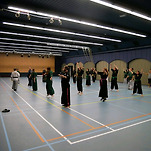
<p style="text-align: left;"></p><div class="figure-img" data-ke-type="image" data-ke-style="alignCenter" data-ke-mobilestyle="widthOrigin"><img src="https://t1.daumcdn.net/cafeattach/17RPA/99ede0d71234412a55ecfe0f0b13033223f47d6b" class="txc-image" data-img-src="https://t1.daumcdn.net/cafeattach/17RPA/99ede0d71234412a55ecfe0f0b13033223f47d6b" data-origin-width="1080" data-origin-height="486"></div><div class="figure-img" data-ke-type="image" data-ke-style="alignCenter" data-ke-mobilestyle="widthOrigin"><img src="https://t1.daumcdn.net/cafeattach/17RPA/a4f7c73840498d029796a58c9f6eb630648d93da" class="txc-image" data-img-src="https://t1.daumcdn.net/cafeattach/17RPA/a4f7c73840498d029796a58c9f6eb630648d93da" data-origin-width="1080" data-origin-height="486"></div><p style="text-align: left;"><br>"Lessons Shared Inside the Dojang and Lessons Applied Outside the Dojang"<br><br>■ Commentary by GM Jeong Seong Kim<br><br>Bas de Hoogen’s essay is a powerful reflection of what it means to live the martial path, not just practice it. He eloquently captures the spirit of Haedong Kumdo—both as a discipline rooted in precise technique and as a life-guiding philosophy. His journey from a seasoned Karate practitioner to a beginner in swordsmanship reveals the humility and strength required to start anew.<br><br>One of the most striking elements is his insight into the act of teaching. Bas emphasizes that instruction is not a one-way transmission of knowledge but a shared process of discovery. His experience of learning through students’ questions—particularly those that made him reconsider things he once took for granted—shows a mature and evolving understanding of martial principles.<br><br>Equally admirable is how he connects Dojang practice with daily life. He speaks of patience, empathy, humility, and consistency—not as abstract ideals, but as tools forged on the training floor and used in everyday encounters. This is true Mudo: a way of living rooted in practice, awareness, and self-reflection.<br><br>Bas's closing thoughts are particularly profound: “Though the sword may be sheathed when I step outside the Dojang, its teachings remain in my hands, my mind and my heart.” These words remind us all that the real mastery lies not in the blade, but in the person who wields it.<br><br>I believe Bas is ready, not just in skill but in spirit, for his 2nd Dan. I look forward to seeing how he continues to embody and share the deeper truths of Haedong Kumdo.<br><br>======<br>The Sword May Be Sheathed, But Its Teachings Remain."<br>— Reflections by Bas de Hoogen (2nd Dan Essay)<br>#HaedongKumdo #JinyoungSsangkumRyu #WayOfTheSword #MartialArtsPhilosophy #LivingTheWay #MudoSpirit #DojangLife #Swordsmanship #BlackBeltJourney #MartialMindset #DisciplineAndHumility #PracticeAndLife #LifelongLearning<br>=====<br><br>Lessons Shared Inside the Dojang and Lessons Applied Outside the Dojang<br><br>A second Dan essay written by Bas de Hoogen, May 2025<br><br>--<br><br>It is Tuesday evening at 21:15. We are standing outside the Dojang, waiting for the final people of the previous class to exit so we ourselves may enter. As we enter, the conversations which started outside are slowly ending and as the command to line up is given, everyone quickly gets to their place and falls silent. The class is about to begin and this room transforms. It is no longer just a room, the Dojang is a place where lessons are learned and shared and carried into the wider world.<br><br>Moments like these remind me that the Dojang is more than a training hall, it is a space where knowledge is passed on, where not only technique but also spirit is taught. These lessons we learn do not stay within, they follow us into our lives. In this essay, I want to reflect on two ideas which are important to me: how teaching and the sharing of knowledge deepens one’s own understanding and the ways in which the lessons of Haedong Kumdo continue to shape our lives beyond the Dojang.<br><br>I first started with Haedong Kumdo about seven or eight years ago. Before that I was a practitioner of Wado Ryu Karate, I had done this for 16 years and had also given classes to children. Beginning my journey in Haedong Kumdo meant starting over again, and so I was a white belt student once more. Some universal truths of martial arts carried over, but the sword was new to me. I remember the first time holding a sword, it was awkward and foreign in my hands. There was a quiet discomfort in being a beginner again. But that return to zero was humbling and powerful. It reminded me that true learning often begins where certainty ends.<br><br>As all beginners do, I started by mimicking the motions that were shown to me. Replicating movements based on appearance. However, the essence of training is not in the copying of techniques, but in the understanding of the techniques and feeling the energy flow throughout your body. So began my journey from student to assistant instructor to taking over entire classes on my own.<br><br>To teach is to share in the growth of another, a feeling both humbling and fulfilling. Each student has their own truth, their own strengths, their own questions and their own way of expressing themselves through the sword. In guiding them, I often find myself reeval‎uating techniques I thought I had already mastered. I remember when a student asked me about a certain movement in ssangsu yuk bon, they wanted to know the reason behind it. In that moment, I realized that I had never questioned it deeply myself. It is often in these moments, when a student’s curiosity uncovers something I took for granted, that real growth happens.<br><br>Explaining a begi, breaking down a ssangsu or demonstrating footwork requires not only clarity, but true understanding. Teaching others turns passive knowledge into active insight, it compels one to not only examine the “how” behind a technique, but also the “why”. In this way the act of sharing knowledge becomes a path to deepening my own understanding of Haedong Kumdo. The Dojang is a place of mutual learning, where teacher and student sharpen one another like blades sharpened on the same whetstone.<br><br>Learning and understanding the techniques of Haedong Kumdo is the heart of what we do inside the Dojang. We challenge ourselves to grow, learning new techniques, refining old ones and continually improving as martial artists. And through it all, we try to have fun as well, enjoying the process of learning and growing together. We laugh, we struggle and we grow together. These are all visible aspects of class, students improving, mastering new techniques and refining existing skills. Yet beneath the visible progress in class lie deeper lessons, principles that we carry with us even when not practicing Haedong Kumdo.<br><br>Our experiences inside the Dojang teach us more than swordsmanship, they teach us ways of being. Discipline, focus, humility and perseverance, these are qualities cultivated inside the Dojang but not contained within it. These attributes walk with us as we move through the world. Whether facing challenges at work or school, navigating personal relationships or simply striving to grow as a person, I often find myself guided by principles practiced while holding a sword. Patience developed while rehearsing a ssangsu helps to remain calm when dealing with daily frustrations. The ability to read and predict your opponent during sparring teaches empathy. Before going into a stressful meeting I focus on breathing techniques that are part of Haedong Kumdo. These are just a few of the ways that the teaching from inside the Dojang extends into the wider world. Haedong Kumdo has taught me that progress takes time, mastery is never final and that effort, with consistency and sincerity, carries meaning far beyond technique.<br><br>In the end, Haedong Kumdo is not something I simply practice, it is something I live and breathe. Teaching has deepened my understanding, not only of the techniques, but also of the values that lay underneath the surface. Guiding others reminds me that learning never ends. At the same time, Haedong Kumdo continues to shape how I carry myself in the world beyond the Dojang. Whether teaching or being taught, or moving through daily life, the principles forged during the practice of Haedong Kumdo continue to shape me. Each cut, each lesson, each shared moment is part of an ongoing journey. And as I continue on the path, I find myself more curious than ever, not only about mastering the sword, but about the kind of person I am becoming through it. In every class I teach, I see reflections of my own journey. A vision which fills me with both humility and pride. Though the sword may be sheathed when I step outside the Dojang, its teachings remain in my hands, my mind and my heart.<br><br>#HaedongKumdo #JinyoungSsangkumRyu #WayOfTheSword #MartialArtsPhilosophy #LivingTheWay #MudoSpirit #DojangLife #Swordsmanship #BlackBeltJourney #MartialMindset #DisciplineAndHumility #PracticeAndLife #LifelongLearning<br>In Korean <br><br>"도장에서의 배움, 그리고 그 바깥에서의 실천"<br><br>— 김정성 총재 논평<br><br>Bas de Hoogen 사범의 에세이는 무도를 '단지 수련하는 것'이 아닌, '삶으로 살아내는 것'의 본질을 잘 드러냅니다. 그가 겸손히 무도의 여정을 다시 시작하고, 지도자에서 수련생, 다시 지도자로 거듭나는 과정은 해동검도의 정신을 깊이 담아냅니다.<br><br>특히 '가르친다는 것'에 대한 그의 관점은 인상적입니다. Bas는 가르침이 단방향이 아니라, 질문과 성찰을 통해 서로를 성장시키는 과정임을 실감 있게 전달합니다. 수련생의 질문이 자신의 무의식을 일깨우고, 그를 더욱 깊이 있는 이해로 이끈 경험은 진정한 지도자만이 할 수 있는 통찰입니다.<br><br>또한 그는 도장에서 배운 것을 일상 속에서 어떻게 실천하는지를 잘 설명합니다. 인내심, 공감력, 겸손, 꾸준함—이런 덕목들이 단순히 무술의 기법이 아닌, 삶의 태도로 자리 잡은 것입니다.<br><br>마지막 문장인 “비록 도장에서 벗어나면 검은 칼집에 들어가지만, 그 가르침은 여전히 내 손과 마음, 그리고 가슴속에 있다”는 표현은, 무도를 수련하는 모든 이에게 깊은 울림을 줍니다.<br><br>Bas는 2단 심사에 있어 기술은 물론 정신적으로도 충분히 준비된 수련자입니다. 앞으로도 그가 더욱 깊이 있는 해동검도의 길을 걸어가기를 기대합니다.<br><br>《전체 내용》<br><br>도장에서의 배움, 그리고 그 바깥에서의 실천<br><br>2025년 5월, Bas de Hoogen 2단 에세이<br><br>---<br><br>화요일 저녁 9시 15분. 우리는 도장 밖에 서서 기다리고 있다. 앞 타임 수업의 마지막 수련자들이 나가기만을 기다리는 중이다. 문이 열리고 우리가 들어서면, 밖에서 나누던 대화들도 조용히 마무리되고, “정렬”이라는 구령이 들리자 모두가 빠르게 제자리를 찾아가고 정숙해진다. 수업이 시작되고, 이 공간은 변화한다. 단순한 방이 아니라, 배움이 이루어지고 나눠지며 세상으로 이어지는 곳으로 전환된다.<br><br>이런 순간은 나에게 도장이 단지 수련장이 아닌, 지식과 정신이 전수되는 장소임을 상기시킨다. 여기서 배운 것들은 도장 안에 머물지 않는다. 그것은 우리의 삶으로 따라온다. 이번 에세이에서는 나에게 중요한 두 가지 주제, 즉 '가르침과 지식의 나눔이 어떻게 나 자신의 이해를 더 깊게 하는가', 그리고 '해동검도의 수련이 도장 밖의 삶에 어떻게 영향을 주는가'를 성찰하고자 한다.<br><br>나는 약 7~8년 전부터 해동검도를 시작했다. 그 전에는 16년 동안 와도류 가라테를 수련했고, 어린이들을 지도한 경험도 있었다. 해동검도를 시작한다는 것은 완전히 새롭게 시작하는 것이었고, 다시 백띠로 돌아가는 길이었다. 무도에 대한 보편적인 진리는 이어졌지만, 검술은 나에게 완전히 새로운 영역이었다. 검을 처음 잡았던 순간을 기억한다. 어색했고 낯설었다. 초심자로 다시 돌아가는 일은 조용한 불편함이 있었지만, 동시에 겸손하고 강력한 경험이었다. 진정한 배움은 확신이 끝나는 지점에서 시작된다는 것을 다시금 깨달았다.<br><br>모든 초보자처럼 나도 보여준 동작을 따라 하며 시작했다. 겉모습을 흉내 내는 수준이었다. 하지만 수련의 본질은 기술을 복사하는 데 있는 것이 아니라, 기술을 이해하고 몸을 통해 에너지의 흐름을 느끼는 데 있다. 그렇게 나의 여정은 수련생에서 보조 지도자, 그리고 이제는 단독으로 수업을 맡는 지도자로 이어졌다.<br><br>가르친다는 것은 다른 이의 성장을 함께 나누는 일이며, 이는 겸허하면서도 충만한 느낌을 준다. 각 수련생은 자신만의 진실과 강점, 질문, 그리고 검을 통한 표현 방식을 가지고 있다. 그들을 지도하며 나 자신이 이미 익혔다고 생각했던 기술을 다시금 재평가하게 된다. 어떤 수련생이 쌍수육본의 한 동작에 대해 질문한 적이 있었는데, 나는 그 동작의 이유를 깊이 생각해 본 적이 없다는 사실을 그때 깨달았다. 이렇게 학생의 호기심이 내가 당연하게 여겼던 것을 드러내주는 순간에 진정한 성장이 일어난다.<br><br>베기 동작을 설명하거나, 쌍수를 분석하거나, 보법을 시범 보이는 일은 단지 명확한 전달만이 아니라, 진정한 이해를 필요로 한다. 가르친다는 것은 수동적인 지식을 능동적인 통찰로 바꾼다. ‘어떻게’뿐만 아니라 ‘왜’라는 질문까지 탐구하게 한다. 그렇게 지식을 나누는 행위는 나 자신이 해동검도를 더 깊이 이해하는 길이 된다. 도장은 교사와 제자가 서로를 갈고닦는 숫돌과 같은 상호 학습의 공간이다.<br><br>해동검도의 기술을 배우고 이해하는 것은 도장 안 수련의 핵심이다. 우리는 스스로를 시험하고, 새로운 기술을 배우며, 익숙한 것을 정제하고, 무도로서 지속적으로 발전하고자 한다. 그리고 그 모든 과정에서 우리는 즐거움도 함께 나눈다. 웃고, 고군분투하고, 함께 성장한다. 이는 수업에서 눈에 보이는 부분이다—수련생들이 새로운 기술을 익히고, 기존의 기량을 정제해 나간다. 하지만 눈에 보이는 진보 아래에는 더 깊은 배움이 있다. 그것은 우리가 수련을 하지 않을 때에도 여전히 삶 속에 자리하는 원리들이다.<br><br>도장 안에서의 경험은 단지 검술 이상을 가르쳐 준다. 그것은 존재 방식 자체를 가르친다. 절제, 집중, 겸손, 끈기—이러한 덕목들은 도장에서 길러지지만, 거기에서 끝나지 않는다. 이 속성들은 우리와 함께 세상을 살아간다. 직장이나 학교에서의 도전, 인간관계, 개인적 성장의 순간마다 나는 검을 쥘 때 익힌 원칙들에 의해 인도받는다. 쌍수를 연습하며 길러진 인내는 일상 속 짜증스러운 상황에서도 평정을 유지하게 한다. 겨루기 중 상대의 움직임을 읽고 예측하는 능력은 공감력을 길러준다. 긴장되는 회의 전에 나는 해동검도에서 익힌 호흡법을 활용한다. 이것들은 도장에서 배운 것들이 바깥 세계로 확장되는 몇 가지 사례일 뿐이다. 해동검도는 나에게 진보에는 시간이 필요하며, 숙달에는 끝이 없고, 성실한 노력은 단지 기술 이상의 가치를 지닌다는 것을 가르쳐 주었다.<br><br>결국, 해동검도는 단지 내가 “수련하는 것”이 아니라, 내가 “살아 숨 쉬는 것”이다. 가르침은 나의 이해를 더 깊게 했고, 그저 기술뿐만 아니라 그 밑에 깔린 가치들까지 이해하게 했다. 다른 이를 이끄는 일은, 배움에는 끝이 없음을 상기시켜 준다. 동시에, 해동검도는 내가 세상을 어떻게 살아가는지에도 영향을 미친다. 가르칠 때든, 배울 때든, 일상을 살아갈 때든, 해동검도 수련 중 길러진 원칙들은 여전히 나를 빚어가고 있다. 한 번의 베기, 하나의 교훈, 하나의 나눔된 순간이 모두 이어진 하나의 여정이다. 나는 이 길 위에서, 검을 숙달하는 것뿐만 아니라, 내가 어떤 사람으로 변해가고 있는지에 대해 점점 더 궁금해진다. 내가 가르치는 매 수업에서, 나는 내 자신의 여정을 비추는 한 장면을 본다. 그것은 겸허함과 자긍심을 동시에 안겨주는 비전이다. 비록 도장을 떠날 때 검은 칼집에 들어가 있지만, 그 가르침은 여전히 내 손과 마음, 그리고 가슴속에 남아 있다.<br><br><br><br></p>
<!-- -->