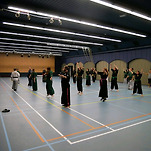
<p style="text-align: left;">■ Commentary on Tjardo’s 2nd Dan Essay<br><br>Tjardo’s essay offers a thoughtful and well-structured reflection on how natural movement principles align with Haedong Kumdo training. Rather than focusing solely on technique, he approaches martial arts as a holistic practice that integrates biomechanics, breath, and mental discipline.<br><br>By outlining four core principles—joint mobility with stability, spinal alignment, breath-movement coordination, and kinetic linkage—he presents a functional framework for sustainable and powerful movement. His emphasis on mindful, consistent practice and the role of movement in daily life shows a mature understanding that martial arts is not confined to the dojang.<br><br>Moreover, his approach bridges modern physical training with traditional martial philosophy, especially in how energy is conserved, transmitted, and expressed. Tjardo demonstrates not only technical insight but also a strong philosophical foundation. His growth is evident, and he is clearly prepared to advance to the next level.<br><br>— GM JS Kim<br>Founder, UWHKF <br>Jinyoung Ssangkum Ryu </p><div class="figure-img" data-ke-type="image" data-ke-style="alignCenter" data-ke-mobilestyle="widthOrigin"><img src="https://t1.daumcdn.net/cafeattach/17RPA/6317addc32e6cf401afbe97958bdb41dedca1111" class="txc-image" data-img-src="https://t1.daumcdn.net/cafeattach/17RPA/6317addc32e6cf401afbe97958bdb41dedca1111" data-origin-width="1080" data-origin-height="1498"></div><p style="text-align: left;">Defining Natural Movement:<br>Natural movement is not an arbitrary list of exercises but a framework grounded and found in four key principles in my experience:<br><br>1. Joint Mobility Within Stability: Every joint, from theankles to theshoulders, must be ableto commit a full, pain-free range of motion whilemaintaining stability under load. This interplay allows the body to absorb forces safely and generate power without undue stress on ligaments or cartilage. I believe joint stability to be profoundly important within thepactices of Haedong Kumdo.<br><br>2. Spinal Alignment and CoreBracing: A neutral spineis neither rigidly straight nor excessively curved. it instead responds dynamically to movement demands. Engaging the deep core muscle groups, protects thespineand transmits forcebetween upper and lower body segments.<br><br>3. Breath-movement Synchronization: Natural movement integrates diaphragmatic breathing with motion. Proper inhalation primes the core for stability; controlled exhalation during intenseexercise or sword swings ensures theenergy recirculates and prevents energy leaks.<br><br>4. Optimal Force Transmission (KineticLinkage): Efficient movement flows through a kinetic chain—from theground up. For example, a well‐executed squat begins with a stable foot foundation, transfers forcethrough the legs and hips, engages thetorso, and finally mobilizes thearms. <br><br>These principles mirror thosefound in Haedong Kumdo, where this chain of motion and kineticlinkage areparamount. In both contexts, wasted motion is theenemy of power and longevity.<br><br>Applications in Daily Life and Performance:<br>When weinternalizenatural movement, wesee immediatedividends in everyday tasks. Lifting boxes off the floor becomes a safe hip-hingerather than a strenuous back bend; reaching for a high shelf engages scapular muscles smoothly instead of straining the shoulder joints. Athletes benefit even more profoundly. AHaedong Kumdo practiciner may find the process of natural movement to greatly aid in retaining energy, and thus directly increasing stamina during training. When properly executed from the ground up, (as mentioned before in -4. Kinetic linkage) this will also evidently contribute to finding flow in forms and all-round movement. Swords becomeeasier to swing, stances transition moreseamlessly into one another and as energy is circulated and retained, cuts, blocks and long sword sweeps will comewith much greater easeto follow.<br><br>Cultivating Natural Movement:<br>Awareness is the first step. Simple self-assessments—such as checking whether one can squat with heels flat and torso upright, to spot glaring mobility deficits. From there, targeted drills optimize joint function: ankle circles, hip internal-external rotations, and shoulder stretches with a resistance band. <br><br>These kind of exercises are typically handled by the instructor of the Haedong Kumdo class, as a warming-up for the students. Core bracing exercises arealso found to bewildly important in order to resist unwanted movement in the spine, without turning the torso into a rigid plank. Breath work—practicing slow inhalations during sword swings and contraction, all to integrate breathing into movement. <br><br>Over time, these building blocks coalesce into fluid, safe patterns: lunges that feel grounded, push-ups that flow from a sturdy midsection, and even everyday walking that utilizes gluteal power rather than quad or back overcompensation.<br>Regular practice demands both patience and intention. <br><br>Just as Haedong Kumdo students drill basiccuts hundreds and thousands of times to ingrain efficiency, those pursuing natural movement must commit to consistent, mindful repetition. <br><br>Recording short videos of one’s cuts and stances and comparing them against ideal models can accelerate progress by revealing unnoticed compensations. Seeking feedback from your master ensures that corrective adjustments hit themark and do not introduce new imbalances.<br><br>Long-Term Benefits:<br>Embracing natural movement principles yields a cascade of long-term advantages. Injury prevention tops the list in my opinion: balanced joint function and core integrity protect against acutestrains and chronic wear-and-tear conditions. Enhanced athletic performance follows, as the body channels force optimally and reduces metabolic “waste” from unnecessary muscular tension. Beyond the physical, mental resilience grows in tandem; focused movement practice doubles as moving meditation, often found in Kimu. <br><br>Finally, as everyday activities become less taxing, individuals reclaim timeand energy for pursuits they love—whether that’s exploring a hiking trail, engaging in martial arts, or living day to day life without thelooming stress of fear or strain.<br><br>#HaedongKumdo #NaturalMovement #MartialArtsPhilosophy #KineticLinkage #MindfulTraining<br>#BreathAndMotion #FunctionalMovement #KoreanSwordArt #MartialWisdom #EnergyFlow<br>#SecondDanEssay #HolisticMartialArts #JointStability #SpinalAlignment #MovingMeditation</p><div class="figure-img" data-ke-type="image" data-ke-style="alignCenter" data-ke-mobilestyle="widthOrigin"><img src="https://t1.daumcdn.net/cafeattach/17RPA/f5548b4a8a60d04081a106f95672dc222fe9600c" class="txc-image" data-img-src="https://t1.daumcdn.net/cafeattach/17RPA/f5548b4a8a60d04081a106f95672dc222fe9600c" data-origin-width="872" data-origin-height="1298"></div><div class="figure-img" data-ke-type="image" data-ke-style="alignCenter" data-ke-mobilestyle="widthOrigin"><img src="https://t1.daumcdn.net/cafeattach/17RPA/37b3732401aa20f62085ea4208c644388fe90e15" class="txc-image" data-img-src="https://t1.daumcdn.net/cafeattach/17RPA/37b3732401aa20f62085ea4208c644388fe90e15" data-origin-width="911" data-origin-height="915"></div><p style="text-align: left;"></p><div class="figure-img" data-ke-type="image" data-ke-style="alignCenter" data-ke-mobilestyle="widthOrigin"><img src="https://t1.daumcdn.net/cafeattach/17RPA/0e65e0c7eab227d09ba681500c09992882cd3658" class="txc-image" data-img-src="https://t1.daumcdn.net/cafeattach/17RPA/0e65e0c7eab227d09ba681500c09992882cd3658" data-origin-width="1078" data-origin-height="1152"></div><p style="text-align: left;"></p><div class="figure-video" data-ke-type="video" data-video-url="https://kakaotv.daum.net/embed/player/cliplink/rvrnzc53dyuw38r97r7ofvg5x@my?service=daum_cafe" data-video-host="kakaotv" data-video-play-service="daum_cafe" data-video-width="1440" data-video-height="1440" data-ke-style="alignCenter" data-video-thumbnail="https://thumb.kakaocdn.net/dna/kamp/source/rvrnzc53dyuw38r97r7ofvg5x/thumbs/4.jpg?credential=TuMuFGKUIcirOSjFzOpncbomGFEIdZWK&expires=33304919589&signature=ndr%2B8Qggx9DgL%2FsA9vK6QHRBIEk%3D&ts=1748010789" data-ke-mobile-mobilestyle="widthFull" data-video-origin-width="1440" data-video-origin-height="1440"><iframe src="https://kakaotv.daum.net/embed/player/cliplink/rvrnzc53dyuw38r97r7ofvg5x?service=daum_cafe&f=p&ptoken=eyJhbGciOiJIUzUxMiIsInR5cCI6IkpXVCJ9.eyJpZCI6InJ2cm56YzUzZHl1dzM4cjk3cjdvZnZnNXgiLCJ0aWQiOiI2Mjc4ZDg0YS1iZDVhLTQyYmItODBiMy1lMTI3NGQ1Y2I4NWYiLCJhcHBfaWQiOiJkYXVtX2NhZmUiLCJleHAiOjE3OTI1MzA5MTl9.uiOehPc7QrHGnw4vvcdPyW6hZWCTy2FnJXPjdAlER5y87bqSahLWjG3WaaCnYUBYsM4jYz082ByZ7t95KVvMcQ&autoplay=0&ptoken=eyJhbGciOiJIUzUxMiIsInR5cCI6IkpXVCJ9.eyJpZCI6InJ2cm56YzUzZHl1dzM4cjk3cjdvZnZnNXgiLCJ0aWQiOiI2Mjc4ZDg0YS1iZDVhLTQyYmItODBiMy1lMTI3NGQ1Y2I4NWYiLCJhcHBfaWQiOiJkYXVtX2NhZmUiLCJleHAiOjE3OTI1MzA5MTl9.uiOehPc7QrHGnw4vvcdPyW6hZWCTy2FnJXPjdAlER5y87bqSahLWjG3WaaCnYUBYsM4jYz082ByZ7t95KVvMcQ&autoplay=0" width="1440" height="1440" frameborder="0" scrolling="no" allowfullscreen="" allow="encrypted-media"></iframe><div class="figcaption"></div></div><div class="figure-video" data-ke-type="video" data-video-url="https://kakaotv.daum.net/embed/player/cliplink/rvj2gmcqhc005hgvppe1gdu03@my?service=daum_cafe" data-video-host="kakaotv" data-video-play-service="daum_cafe" data-video-width="1268" data-video-height="1316" data-ke-style="alignCenter" data-video-thumbnail="https://thumb.kakaocdn.net/dna/kamp/source/rvj2gmcqhc005hgvppe1gdu03/thumbs/4.jpg?credential=TuMuFGKUIcirOSjFzOpncbomGFEIdZWK&expires=33304919584&signature=W%2FtkyDFudkcHm4MbUd92jZkOcbo%3D&ts=1748010784" data-ke-mobile-mobilestyle="widthFull" data-video-origin-width="1268" data-video-origin-height="1316"><iframe src="https://kakaotv.daum.net/embed/player/cliplink/rvj2gmcqhc005hgvppe1gdu03?service=daum_cafe&f=p&ptoken=eyJhbGciOiJIUzUxMiIsInR5cCI6IkpXVCJ9.eyJpZCI6InJ2ajJnbWNxaGMwMDVoZ3ZwcGUxZ2R1MDMiLCJ0aWQiOiJiYWM2NTgyNS1hNTM4LTQyMmUtYmM2MS1kN2ZhMTJmNjE5NzMiLCJhcHBfaWQiOiJkYXVtX2NhZmUiLCJleHAiOjE3OTI1MzA5MTl9.5F-IIZgQWU7-NPrUWF0qlWV3XqzTPoH4SoAMtitaZEZI0U2fuKEqfot8W4s1jqiiFAVCJpcTMhgHnINcH6Rsxg&autoplay=0&ptoken=eyJhbGciOiJIUzUxMiIsInR5cCI6IkpXVCJ9.eyJpZCI6InJ2ajJnbWNxaGMwMDVoZ3ZwcGUxZ2R1MDMiLCJ0aWQiOiJiYWM2NTgyNS1hNTM4LTQyMmUtYmM2MS1kN2ZhMTJmNjE5NzMiLCJhcHBfaWQiOiJkYXVtX2NhZmUiLCJleHAiOjE3OTI1MzA5MTl9.5F-IIZgQWU7-NPrUWF0qlWV3XqzTPoH4SoAMtitaZEZI0U2fuKEqfot8W4s1jqiiFAVCJpcTMhgHnINcH6Rsxg&autoplay=0" width="1268" height="1316" frameborder="0" scrolling="no" allowfullscreen="" allow="encrypted-media"></iframe><div class="figcaption"></div></div><div class="figure-video" data-ke-type="video" data-video-url="https://kakaotv.daum.net/embed/player/cliplink/rvqvpqq55uhmvda878yze2lew@my?service=daum_cafe" data-video-host="kakaotv" data-video-play-service="daum_cafe" data-video-width="1262" data-video-height="1440" data-ke-style="alignCenter" data-video-thumbnail="https://thumb.kakaocdn.net/dna/kamp/source/rvqvpqq55uhmvda878yze2lew/thumbs/6.jpg?credential=TuMuFGKUIcirOSjFzOpncbomGFEIdZWK&expires=33304919578&signature=A0gFRwAkXslGr9dXakP359817So%3D&ts=1748010778" data-ke-mobile-mobilestyle="widthFull" data-video-origin-width="1262" data-video-origin-height="1440"><iframe src="https://kakaotv.daum.net/embed/player/cliplink/rvqvpqq55uhmvda878yze2lew?service=daum_cafe&f=p&ptoken=eyJhbGciOiJIUzUxMiIsInR5cCI6IkpXVCJ9.eyJpZCI6InJ2cXZwcXE1NXVobXZkYTg3OHl6ZTJsZXciLCJ0aWQiOiI2ZDM5ZDgzNS03NjhmLTRmYjgtODE0OS04ODgxMTQ1NTgzNmMiLCJhcHBfaWQiOiJkYXVtX2NhZmUiLCJleHAiOjE3OTI1MzA5MTl9.oLsJrVtUwTDNI_ZuUpfsvno3FSNHYR-TybG_3MVqHLzn0lEJqHIUbC5YlPCBbmw1c6pWFmgRpav3KZQveJwPnA&autoplay=0&ptoken=eyJhbGciOiJIUzUxMiIsInR5cCI6IkpXVCJ9.eyJpZCI6InJ2cXZwcXE1NXVobXZkYTg3OHl6ZTJsZXciLCJ0aWQiOiI2ZDM5ZDgzNS03NjhmLTRmYjgtODE0OS04ODgxMTQ1NTgzNmMiLCJhcHBfaWQiOiJkYXVtX2NhZmUiLCJleHAiOjE3OTI1MzA5MTl9.oLsJrVtUwTDNI_ZuUpfsvno3FSNHYR-TybG_3MVqHLzn0lEJqHIUbC5YlPCBbmw1c6pWFmgRpav3KZQveJwPnA&autoplay=0" width="1262" height="1440" frameborder="0" scrolling="no" allowfullscreen="" allow="encrypted-media"></iframe><div class="figcaption"></div></div><p style="text-align: left;"></p>
<!-- -->