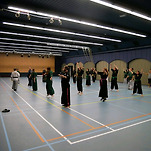
<p style="text-align: left;">ALEXANDAR KOSTOV 3 dan <br>Jinyoung Ssankum Ryu<br>Sofia, BULGARIA <br>28.01.2025<br></p><div class="figure-img" data-ke-type="image" data-ke-style="alignCenter" data-ke-mobilestyle="widthOrigin"><img src="https://t1.daumcdn.net/cafeattach/17RPA/83b0bee1c502b12c03d142d7bc3e245eaf859f07" class="txc-image" data-img-src="https://t1.daumcdn.net/cafeattach/17RPA/83b0bee1c502b12c03d142d7bc3e245eaf859f07" data-origin-width="947" data-origin-height="947"></div><p style="text-align: left;"><br><span style="color: #006DD7;">17. Can you elaborate on your thoughts about martial arts training being composed of three elements: <br>Skills, Philosophy, and Healing?</span><br><br>Martial arts is more than a system of combat; it is a way of life that integrates physical prowess, mental discipline, and spiritual well-being. <br>A complete martial artist embraces three core elements: skills, philosophy, and healing. Together, these aspects create a balanced individual, capable of defending themselves, understanding their purpose, and cultivating their inner peace.<br><br>I. Skills: The Physical Foundation<br><br>At the heart of martial arts lies the development of physical skills, which include techniques, reflexes, and strength. This element focuses on practical abilities such as striking, grappling, and evasion. Training in these areas builds coordination, endurance, and confidence.<br><br>1. Technical MasteryMartial arts styles, from karate to Brazilian jiu-jitsu, emphasize unique techniques. The precision required in executing strikes or holds transforms the body into an efficient tool of self-defense.<br><br>2. Conditioning the Body<br><br>Regular training involves rigorous exercises designed to enhance physical fitness. Strength, flexibility, and speed are vital for both performance and injury prevention.<br><br>3. Discipline and Consistency<br><br>Mastering skills requires discipline. Consistent practice over time ensures that movements become instinctive, enabling practitioners to react effectively under pressure.While these physical skills are crucial, martial arts would be incomplete without a deeper understanding of their purpose and application, leading us to the second element.<br><br>II. Philosophy: The Guiding Principle<br><br>Martial arts is not merely about physical combat; it is a way to cultivate the mind and spirit. <br>The philosophy of sword martial arts encompasses principles and teachings that go beyond mere combat techniques. It integrates physical mastery with mental discipline, spiritual growth, and ethical conduct.<br><br>1. Respect and Humility<br><br>Central to martial arts philosophy is the importance of respect—for oneself, for the teacher, and for the opponent. Humility reminds practitioners that there is always room to grow.<br><br>2. Self-Control and Emotional Discipline<br><br>The training instills mental resilience and emotional regulation. Martial artists learn to control anger and fear, responding thoughtfully rather than impulsively.<br><br>3. Spiritual Growth<br><br>For many, martial arts is a journey toward self-discovery. Philosophical teachings, such as those found in Taoism or Zen Buddhism, encourage mindfulness and inner peace.The philosophical aspect ensures that martial artists use their skills for protection, not aggression. It aligns their actions with ethical principles, emphasizing balance and harmony.<br><br>4. Mortality and the Warrior Spirit<br><br>The sword symbolizes life and death, often making practitioners confront their mortality. This fosters a deeper appreciation of life and the warrior's spirit—living with courage, purpose, and an understanding of the impermanence of existence.<br><br>III. Healing: Nurturing the Body and Soul<br><br>Martial arts training would not be sustainable without the element of healing, which restores and maintains the practitioner’s physical and mental well-being. This element often involves ancient practices that complement modern health techniques.<br><br>1. Recovery and Injury Prevention<br><br>Training often takes a toll on the body. Practices like stretching, massage, and proper rest are essential for recovery. Styles like Tai Chi incorporate gentle movements that promote joint health and flexibility.<br><br>2. Cultivation of Ki (Energy)<br><br>Energy is invisible, but its manifestations are tangible. Any movement, change, or development is the result of the action of energy. It is the basis of the growth of plants, the movement of rivers, and the pulsation of stars. At the same time, energy is inextricably linked to human life, manifesting itself on three levels: physical, mental, and spiritual.<br><br>Eastern martial arts place significant emphasis on life energy. Practices like KIMU focus on cultivating and balancing this energy, which supports overall vitality and emotional well-being.Tension blocks energy flow. Kimu training focuses on relaxation and maintaining fluid movements to ensure the uninterrupted flow of ki.<br><br>3. Meditation and Mental Clarity<br><br>Healing extends to the mind through meditation. This practice reduces stress, sharpens focus, and strengthens the connection between the body and mind, enabling practitioners to achieve inner harmony.<br>By combining healing techniques with physical training, martial arts practitioners maintain longevity and balance, allowing them to sustain their journey.<br><br>Martial arts is a comprehensive discipline that harmonizes the body, mind, and spirit. The physical skills provide the foundation for self-defense and personal growth. Philosophy guides practitioners to live ethically and with purpose. <br>Healing ensures that the body and mind are nurtured, enabling a lifetime of practice.When integrated, these three elements transform martial arts into more than a physical activity. They create a way of life, offering lessons that extend far beyond the training hall. In embracing skills, philosophy, and healing, practitioners embark on a journey of self-improvement, resilience, and inner peace—a testament to the enduring power of martial arts.<br></p><div class="figure-img" data-ke-type="image" data-ke-style="alignCenter" data-ke-mobilestyle="widthOrigin"><img src="https://t1.daumcdn.net/cafeattach/17RPA/e513ff7235dbd8d42005f29d9576ba203a502ecc" class="txc-image" data-img-src="https://t1.daumcdn.net/cafeattach/17RPA/e513ff7235dbd8d42005f29d9576ba203a502ecc" data-origin-width="960" data-origin-height="960"></div><p style="text-align: left;"><br><span style="color: #006DD7;">■ Response to Alexandar Kostov – 4th Dan Essay</span><br><br>---<br><br>Dear Alexandar,<br><br>Thank you for your thoughtful reflection. Your essay shows a mature understanding of martial arts—not as mere combat, but as a path that unites skill, philosophy, and healing into one integrated life practice.<br><br>In Jinyoung Ssangkum Ryu, these three are not separate elements. They are different faces of the same journey:<br><br>Skill refines your body and teaches you timing and balance.<br><br>Philosophy shapes your character, helping you act with awareness and humility.<br><br>Healing, especially through Kimu, restores your inner flow and reconnects you to life’s natural rhythm.<br><br><br>Your mention of Ki energy and the importance of balance shows that your practice is not limited to technique but grounded in experience and insight. That is what we hope to see in a 4th Dan practitioner.<br><br>As you continue, remember:<br><br>> “Martial arts is not what you do—it is what you become.”<br><br>Keep training with patience and purpose. I look forward to seeing your continued growth as both a martial artist and guide for others.<br><br>With encouragement,<br>Kim Jeong Seong<br>Founder & President<br>Jinyoung Ssangkum Ryu ☆ United World Haedong Kumdo Federation<br><br>~~~~~~~~~~~~<br><br>In Korean<br>---------------------<br><br>ALEXANDAR KOSTOV 3단<br>진영쌍검류<br>불가리아 소피아<br>2025년 1월 28일<br><br>17. 무예 수련이 ‘기술, 철학, 치유’라는 세 가지 요소로 구성된다고 할 때, 이에 대한 나의 생각을 설명하겠습니다.<br><br>무예는 단순한 전투 시스템이 아니라, 신체적 능력, 정신적 수양, 그리고 영적 건강을 통합하는 삶의 방식입니다.<br>완전한 무예인은 다음 세 가지 핵심 요소를 함께 갖추고 있어야 합니다: 기술(기량), 철학, 그리고 치유.<br>이 세 가지는 조화를 이루는 개인을 만들어내며, 그 결과 자기 자신을 지킬 수 있을 뿐 아니라, 삶의 목적을 이해하고 내면의 평화를 기를 수 있게 됩니다.<br><br>---<br><br>I. 기술: 신체적 기반<br><br>무예의 핵심은 기술의 연마입니다. 여기에는 기술적 숙련, 반사신경, 근력이 포함됩니다.<br>타격, 방어, 회피 같은 실전 능력은 협응력과 지구력, 자신감을 키우는 데 도움이 됩니다.<br><br>1. 기술적 숙련<br>무술의 각 스타일은 고유한 기술을 강조합니다. 정확한 타격과 제압 기술은 몸을 효율적인 방어 도구로 만들어줍니다.<br><br><br>2. 신체 단련<br>정기적인 훈련은 체력을 강화시키며, 유연성과 속도는 퍼포먼스 향상뿐 아니라 부상 방지에도 필수적입니다.<br><br><br>3. 규율과 일관성<br>기술을 익히기 위해서는 꾸준함이 필요합니다. 반복된 훈련은 동작을 반사적으로 만들고, 긴장 속에서도 효과적으로 반응할 수 있게 해줍니다.<br><br>그러나 이러한 신체적 기술만으로는 무예가 완성되지 않으며, 그 기술의 목적과 의미를 이해하는 것이 중요합니다.<br>---<br><br>II. 철학: 수련의 지침이자 중심 원리<br><br>무예는 단순한 전투 기술을 넘어서, 마음과 정신을 수양하는 길입니다.<br>검술의 철학은 단지 동작의 숙련을 넘어, 정신적 수양과 영적 성장, 윤리적 행동을 포함한 삶의 원리를 담고 있습니다.<br><br>1. 존중과 겸손<br>자기 자신, 스승, 그리고 상대에 대한 존중은 무예의 핵심입니다. 겸손은 언제나 배울 것이 있다는 마음을 유지시켜 줍니다.<br><br><br>2. 자제력과 감정 통제<br>훈련은 감정 조절 능력과 정신적 회복력을 기릅니다. 분노나 두려움을 통제하고, 충동이 아닌 숙고로 대응하게 합니다.<br><br><br>3. 영적 성장<br>무예는 자기 발견의 여정이기도 합니다. 도가(道家)나 선(禪)의 가르침처럼, 내면의 평화를 추구하는 철학은 수련의 방향을 제시합니다.<br><br><br>4. 삶과 죽음, 그리고 전사 정신<br>검은 삶과 죽음을 상징합니다. 검을 다루는 수련은 유한한 삶에 대한 깊은 자각을 불러일으키고, 용기와 목적의식을 강화해 줍니다.<br><br>---<br><br>III. 치유: 몸과 마음을 돌보는 과정<br><br>무예 수련이 지속 가능하려면 회복과 치유의 과정이 반드시 병행되어야 합니다. 이는 오래된 전통과 현대적 건강법이 결합된 형태로 존재합니다.<br><br>1. 회복과 부상 예방<br>훈련은 몸에 큰 부담을 주기에 스트레칭, 마사지, 충분한 휴식은 필수입니다. 태극권처럼 부드러운 움직임은 관절 건강에도 좋습니다.<br><br><br>2. 기(氣)의 조화와 운용<br>기(氣)는 눈에 보이진 않지만 그 작용은 분명히 느껴집니다. 모든 변화와 생명 현상은 에너지 흐름의 결과이며, 이는 육체·정신·영혼의 세 영역에 작용합니다.<br><br>동양 무술은 이 생명 에너지의 중요성을 강조합니다.<br>예를 들어, 기무(Kimu) 수련은 에너지의 흐름을 조화롭게 유지하고 증진시키는 데 중점을 둡니다. 긴장은 기의 흐름을 막고, 이완은 그것을 자유롭게 합니다.<br><br>3. 명상과 정신의 맑음<br>치유는 마음의 안정과도 연결됩니다. 명상은 스트레스를 줄이고 집중력을 높이며, 신체와 정신 사이의 연결을 강화시킵니다.<br><br>이러한 회복과 조화의 기술이 함께 할 때, 무예는 단순한 운동을 넘어서 균형 잡힌 삶의 방식이 됩니다.<br><br>---<br><br>결론<br><br>무예는 몸, 마음, 영혼이 조화를 이루는 종합적 수련 체계입니다.<br>기술은 성장의 기초이며, 철학은 삶의 방향을 제시하고, 치유는 지속적인 수련을 가능하게 합니다.<br><br>이 세 가지가 통합될 때, 무예는 단순한 활동이 아니라 하나의 삶의 길이 됩니다.<br>그 안에서 우리는 자기 자신을 이해하고, 균형과 평화 속에서 살아가는 법을 배웁니다.<br><br><br><br><br></p>
<!-- -->